By Emily Parker
Updated November 2026
Chore chart ideas for preschoolers work best when they are visual, short and tied to a daily routine. A good chart lets your three- to five-year-old see what needs doing, check it off, and feel proud without you repeating every instruction. This guide walks through how to pick a setup, build it in an afternoon, and keep it running on busy weeks.
Start With Two to Four Simple Tasks
Preschoolers can handle very little at once, so keep the list short. Pick two to four tasks that happen at predictable times, such as putting shoes in the basket, feeding the pet, or putting toys in the bin. Tasks that take under five minutes are the easiest to finish and the easiest to praise.
Shopping for one? See our guide: 7 Best Chore Charts for Husband Ideas That Actually Get Done (2026).
Choose a Picture-Based Format
Most children this age cannot read yet, so the chart should rely on pictures. Take a photo of each task being done, or use simple clip art, and print it at about the size of a sheet of paper. Place each picture on a separate card so your child can move it from a “To Do” column to a “Done” column.
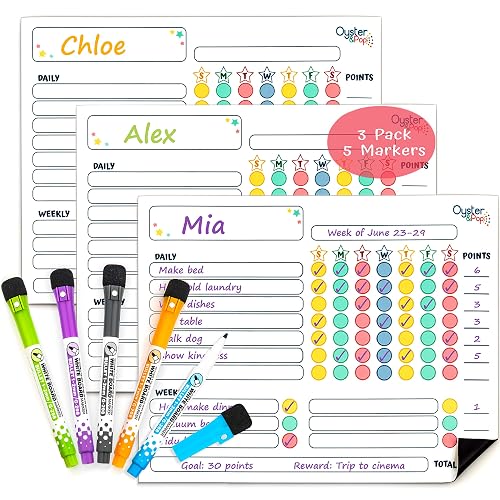
If you prefer a fixed board, a magnetic or dry-erase surface works well. Draw a quick icon next to each task and let your child put a sticker or checkmark beside it when finished.
Ideas for Picture Columns
- Bedtime: toothbrush, pajamas, storybook, lights off
- Morning: bed made, clothes on, teeth brushed, shoes on
- After school or daycare: backpack unpacked, lunchbox in sink, shoes away
- Tidy-up time: blocks in bin, books on shelf, crayons capped
Build a Routine Around the Chart
A chart only works if you use it at the same times every day. Attach the chart where your child already passes, such as near the bathroom or by the front door. Before you start, do the first task together and narrate each step, for example, “Shoes go in the basket. Now you try.”
Give a short reminder at the start of each routine and avoid nagging through the rest of it. Many parents find that a quick “What’s next on your chart?” works better than a list of instructions.
Use Simple Rewards and Praise
Preschoolers respond well to immediate, specific praise. Say “You put all three blocks in the bin without me asking” rather than “Good job.” Some families add a sticker or a checkmark that leads to a small, predictable reward at the end of the week, like choosing the family movie. Keep rewards small and non-food, and avoid taking away a task as a punishment.
Common Mistakes to Avoid
- Adding too many tasks at once. Start small and add one new task every week or two.
- Expecting perfect results. Redo the task together rather than reassigning it in anger.
- Letting the chart go stale. Swap in new pictures or a new sticker style every month or so.
- Using the chart for chores that need a grown-up’s help. Keep tasks truly within your child’s ability.
- Forgetting to check it yourself. Look at the chart with your child each evening so it stays part of the day.
Recommended Gear
- Magnetic dry-erase board: Lets you swap tasks easily as your child grows. View on Amazon
- Laminated picture cards: Protect your task pictures from spills and sticky fingers. View on Amazon
- Hook-and-loop task pocket chart: Gives older preschoolers a physical place to move task cards from “To Do” to “Done.” View on Amazon
For more layout options, see Printable Chore Chart for Preschoolers: 6 Best Picks for Busy Families (2026) and Chore Chart for Preschoolers: A Step-by-Step Guide for Busy Families. If you want picture ideas your child can read on their own, Images for Chore Chart: 7 Picture Ideas Kids Can Read on Their Own has more examples. Families who want a board they can reuse may like Whiteboard Chore Chart Ideas: 7 Setups That Keep Kids on Track.
FAQ
How many chores should a preschooler have?
Most preschoolers do well with two to four tasks at a time. Add a new task only after the current ones become routine.
What age should I start a chore chart?
Many families start around age three, once a child can follow a two-step instruction. Keep the first chart very simple and focused on self-care tasks.
What if my child refuses to do the chores?
Do the first task together, praise the effort, and make the next step smaller. If refusal continues for several weeks, talk with your pediatrician about any concerns about behavior or development.
Conclusion
A good chore chart for a preschooler is short, picture-based and tied to routines you already have. Start with two to four tasks, use praise more than rewards, and add new tasks slowly. With a few weeks of consistency, your child will start to handle many of these jobs with less prompting.
Related reading
- White Board Chore Chart Ideas: 7 Setups Busy Families Can Build Today
- Weekly Chore Chart Ideas: 8 Setups Busy Families Can Build This Week
Ready to choose one?
About Emily Parker
Emily Parker is part of our editorial team and reviews and edits our busy-mom life guides, checking product details against manufacturer specifications and owner feedback.