By Emily Parker
Updated November 2026
An age appropriate chore chart printable gives your kids a clear list of jobs that match what they can handle at their age. In this guide, you will sort tasks by age, build a one-page printable chart, and set up a routine your kids can follow with less nagging. The whole process takes about an hour, and you only need to do it once a season.
Step 1: Match Tasks to Developmental Stages
Start with what each child can do safely and independently, not with what needs doing around the house. Child development guidance generally groups chores like this:
Shopping for one? See our guide: 4 Best Free Printable Daily Routine Chore Chart by Ages (2026): Our Picks.
- Ages 2–3: Put toys in a bin, wipe up spills with a cloth, carry unbreakable items to the table.
- Ages 4–5: Make the bed with help, feed a pet, set napkins and forks, sort laundry by color.
- Ages 6–8: Empty wastebaskets, fold towels, water plants, pack their own backpack.
- Ages 9–12: Load and unload the dishwasher, vacuum, mow with supervision, do their own laundry start to finish.
- Ages 13+: Cook a simple meal, clean a bathroom, handle grocery lists, manage their own schedule.
Every child develops at a different pace, so treat these ranges as a starting point and adjust for your own kids.
Step 2: Build the Printable Layout
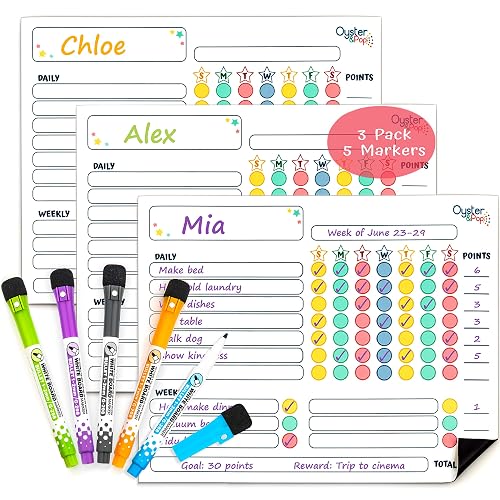
A printable chart works best when a young child can read it without help. Use a simple grid with one column per child and one row per task. For pre-readers, add small pictures next to each word. Keep the chart to a single page so it stays on the fridge where everyone sees it.
| Child Age | Daily Tasks | Weekly Tasks |
|---|---|---|
| 3–5 | Toys back in bin, set table | Help sort laundry |
| 6–8 | Make bed, feed pet | Dust low surfaces, water plants |
| 9–12 | Unload dishwasher, tidy room | Vacuum, do own laundry |
| 13+ | Kitchen cleanup after dinner | Clean bathroom, plan one meal |
If you want a ready-made starting point, the Printable Chore Chart by Age PDF: A Step-by-Step Guide for Busy Families walks through a similar layout you can adapt.
Step 3: Set Up a Routine and Rewards
Tie the chart to a fixed time, such as before breakfast or right after dinner, so the routine runs on its own. Decide what happens when a chore is skipped, and keep the consequence the same every time. Some families use a sticker system for younger kids and a weekly allowance for older ones. The Sticker Chore Chart Printable: 7 Steps to a Setup Kids Will Use covers that approach in detail.
Step 4: Review and Adjust Each Season
Kids grow fast, so revisit the chart every few months. Move a task up when a child masters it, and retire tasks that no longer fit. A teen who handles laundry easily may be ready for meal planning. For older kids, the Teenage Chore Chart PDF: 7 Steps to a Printable Setup Your Teen Will Follow shows how to shift responsibility without losing structure. Sharing Sharing Chores as a Family: Age-Appropriate Tasks with the whole household also helps everyone understand the fairness behind the assignments.
Recommended gear
- Dry-erase or laminated sleeves: A laminated chart lets kids check off tasks with a marker and wipe clean each week. View on Amazon
- Magnetic clips or a clipboard: These keep the chart in place on the fridge and give each child a visible spot for their name. View on Amazon
- Sticker reward sheets: Stickers give younger kids an immediate visual reward for completing a task. View on Amazon
Common mistakes
- Assigning tasks based on what a sibling does rather than on each child’s ability.
- Overloading the chart so that kids stop reading it.
- Changing the rules every week, which makes the system feel optional.
- Skipping the review step, so older kids stay stuck on tasks they’ve outgrown.
- Expecting perfect completion right away; plan for a two- to three-week adjustment period.
FAQ
What age should kids start doing chores?
Most children can start simple tasks around age two or three, such as putting toys away. Keep early jobs short and supervised so they feel successful.
How many chores should each age have?
A common approach is three to five daily tasks plus one or two weekly tasks for school-age kids. Adjust the count based on school schedules and activities.
Should chores be paid?
That depends on your family’s values. Some parents pay for extra jobs and expect basic household tasks to be done without pay. Choose one approach and explain it clearly to your kids.
Conclusion
An age appropriate chore chart printable works when each task matches a child’s developmental stage and the layout is easy to read. Build the chart once, tie it to a daily routine, and review it each season as your kids grow. With a few adjustments, the chart becomes one less thing you have to remind everyone about.
Ready to choose one?
About Emily Parker
Emily Parker is part of our editorial team and reviews and edits our busy-mom life guides, checking product details against manufacturer specifications and owner feedback.