By Emily Parker
Updated November 2026
An age appropriate chore chart matches each child’s tasks to what they can realistically finish on their own. In this guide you will sort chores by age, set a manageable number for each child, and pick a format the whole family can read at a glance. Most setups take under an hour, and you can adjust them as kids grow.
Why Age Appropriate Chore Charts Work Better
A chart that asks a four-year-old to scrub the bathroom sets everyone up for frustration. When tasks match a child’s skills and attention span, kids finish more on their own, and you spend less time redoing or nagging. A good chore chart by age also gives you a built-in way to add responsibility as your children mature. For another angle, check out Chore Chart Ideas by Age: 6 Age-Based Setups for Busy Families.
Shopping for one? See our guide: 4 Best Free Printable Daily Routine Chore Chart by Ages (2026): Our Picks.
Match Chores to Each Age Group
Start with what each age can realistically handle, then choose a few tasks from each band. Use these ranges as a starting point and adjust for your child’s temperament.
- Ages 2–4: Put toys in a bin, carry laundry to the basket, wipe low spills, set napkins on the table.
- Ages 5–7: Make the bed with help, feed a pet, sort socks, water plants, clear the dinner plates.
- Ages 8–10: Load and unload the dishwasher, vacuum one room, fold and put away their own laundry, take out small trash bags.
- Ages 11–14: Cook a simple meal once a week, clean a bathroom, mow or rake, do their own grocery list items.
- Ages 15 and up: Handle laundry start to finish, plan and cook dinner with supervision, manage a weekly cleaning rotation.
Set the Right Number of Chores per Child
For most children, three to five daily tasks plus one or two weekly jobs is enough. Younger kids often do best with one or two daily items that take five minutes or less. Count the total time on a typical day. If it climbs past about 30 minutes for a young child, cut a task or split it.
Rotate Bigger Jobs
Rotate heavier chores weekly so no child gets stuck with the worst job. A simple rotation between siblings keeps things fair and reduces arguments over who did more.
Choose a Format Kids Can Read
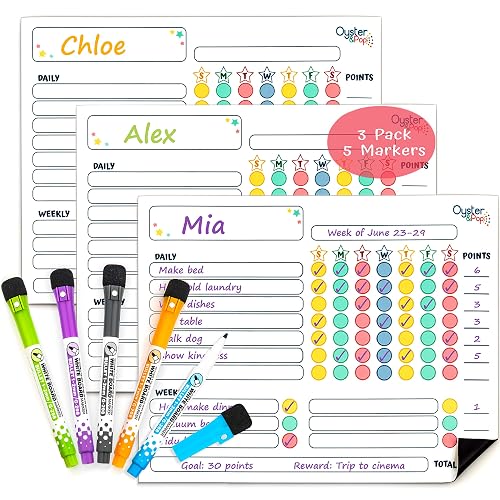
Pre-readers need pictures, while older kids can handle words and checkboxes. Post the chart at kid eye level in a shared spot like the kitchen, and use a simple check-off or magnet system.
| Child’s age | Best format | Typical chore count |
|---|---|---|
| 2–4 | Picture cards with velcro or pocket chart | 2–3 daily |
| 5–7 | Icons with a check-off column | 3–4 daily |
| 8–10 | Written list with a weekly grid | 4–5 daily plus weekly |
| 11+ | Weekly calendar or app | Daily plus 2–3 weekly |
Checklist: Setting Up Your Chart
- List every household task you want shared.
- Sort each task into an age band.
- Assign three to five daily items per child, plus weekly jobs.
- Pick a format that matches each child’s reading level.
- Walk through each chore once, showing the steps.
- Review the chart every three to four months and move tasks up as skills grow.
Common Mistakes
- Giving a young child a task that needs supervision for the whole job.
- Making the chart so long that kids never see the end of it.
- Skipping the walkthrough and assuming kids know what “clean the kitchen” means.
- Leaving the chart unchanged for years while your child’s abilities grow.
- Tying chores to rewards you cannot sustain, so kids quit when the reward stops.
Recommended Gear
- A dry-erase magnetic chart lets you update tasks as kids grow: View on Amazon
- Velcro picture cards work well for pre-readers who move their own cards to “done”: View on Amazon
FAQ
What chores can a 3-year-old do?
Most three-year-olds can put toys in a bin, carry lightweight items, and wipe up small spills with supervision. Keep the list short and celebrate each finished task.
How often should I update an age appropriate chore chart?
Review it every three to four months or whenever a child reaches a new age band. Small updates keep tasks challenging without overwhelming anyone.
Should chores be paid?
That depends on your family’s values. Many parents keep baseline chores unpaid for everyone and use separate paid jobs for extra work. Consult your own judgment on what fits your household.
Conclusion
An age appropriate chore chart works because it matches tasks to real abilities, which keeps kids engaged and helps them build independence. Start small, check the number of tasks against your child’s time and focus, and adjust as they grow. A chart you review every few months will keep working for years.
Related reading
- Montessori Chore Chart by Age: A Step-by-Step Guide for Busy Families
- Chore Chart by Age: 6 Age-Based Chore Lists for Busy Families
- Chore Chart by Age Printable: A Step-by-Step Guide for Busy Families
- Sharing Chores as a Family: Age-Appropriate Tasks
- Work for Hire Chore Chart: A Step-by-Step Setup for Busy Families
Ready to choose one?
About Emily Parker
Emily Parker is part of our editorial team and reviews and edits our busy-mom life guides, checking product details against manufacturer specifications and owner feedback.