As an Amazon Associate I earn from qualifying purchases. This page may contain affiliate links.
Choosing the right magnets for chore chart displays can make the difference between a routine that sticks and a whiteboard covered in fallen tokens. The magnets need to grip firmly enough to stay put on a fridge door, be small and safe enough for young kids to handle, and come in shapes or colors that help children recognize their tasks. This guide compares seven widely available options based on manufacturer specifications, brand reputation, and the patterns owners tend to mention in their reviews. We did not test these products ourselves. Instead, we focused on pull strength ratings, material and coating details, size, and how well each style suits a busy household with several kids and a shared chart.
Our Top Picks
Quick Comparison
| Product | Best for | Key feature |
|---|---|---|
| Ultra Hold Neodymium Disc Magnets | Heavy cardstock and laminated charts | High pull strength in a small disc |
| Ceramic Round Magnets, 1 inch | Budget-friendly family charts | Inexpensive bulk packs with steady hold |
| Ceramic Magnetic Star Shapes | Young children and reward charts | Fun shapes that kids can identify |
| Dry Erase Magnetic Strips | Reusable task lists on a fridge | Writable surface for changing chores |
| Magnetic Clip Holders | Charts that hold paper task cards | Clip grips paper without damage |
| Strong Neodymium Rectangle Magnets | Heavy display boards and metal surfaces | Long rectangle with secure grip |
| Magnetic Pocket Chart Pieces | Multi-step chore systems | Built-in pockets for name cards |
Neodymium Disc Magnets by Ultra Hold
These suit parents who want a strong, low-profile magnet to hold a laminated or cardstock chore chart firmly on a steel refrigerator door. They are a good match for families who have had cards slide down or fall off overnight.
Key specs
- Neodymium (rare-earth) magnet core
- Small disc format, typically around 1 inch in diameter
- Sold in multi-count packs
- Strong hold relative to size; check the manufacturer’s listed pull force
Pros
- Holds heavier paper and laminated sheets well
- Small footprint keeps the chart looking tidy
- Works on most steel fridge surfaces
Cons
- Very strong magnets can be hard to slide off without a fingernail
- Not recommended for households with very young children who might mouth small magnets
Ceramic Round Magnets, 1 Inch
Ceramic (ferrite) magnets are a budget pick for families who need many magnets for a large chart or several charts. They are a practical choice when you want steady, everyday hold without paying for rare-earth strength.
Key specs
- Ceramic ferrite core
- Round format, about 1 inch across
- Bulk packs suitable for multiple task cards
- Moderate pull strength, adequate for lightweight cards
Pros
- Good value when you need a lot of magnets
- Gentle grip makes them easy to move
- Fine for standard cardstock and paper
Cons
- Weaker hold than rare-earth options on heavy or laminated sheets
- Can slip on glossy surfaces if the card is thick
Ceramic Magnetic Star Shapes
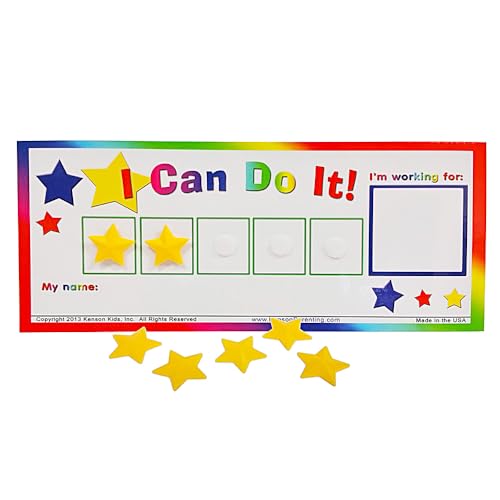
Star and shape magnets work well for younger children who respond to visual rewards. Parents running a sticker or star-earning system often pair these with a simple chart so kids can see progress at a glance.
Key specs
- Ceramic magnetic core with decorative printed or colored face
- Star and themed shapes in assorted colors
- Typically sold in mixed packs
- Lightweight, suited to paper or light cardstock
Pros
- Visually engaging for preschool and early elementary kids
- Easy for small hands to grab and place
- Good for reward-based charts
Cons
- Shapes can be too light to hold thick charts reliably
- Decorative faces may chip with heavy handling
Dry Erase Magnetic Strips
Dry erase magnetic strips give you a writable surface on the fridge, so you can change assignments without reprinting a chart. They suit families whose chores rotate weekly or who want to add tasks as kids grow older.
Key specs
- Flexible magnetic sheet with dry-erase surface
- Cut-to-length format for custom chart sizes
- Works with standard dry-erase markers
- Requires a steel surface for adhesion
Pros
- Reusable and easy to update
- Can be cut to fit any fridge or board section
- Inexpensive way to build a large writable chart
Cons
- Markers can ghost if not wiped promptly
- Not a magnet for holding separate cards; it is the chart surface itself
Magnetic Clip Holders
Magnetic clips hold paper task cards, photos, or printed checklists in place. They are useful when you want kids to slide a card out, complete the task, and slide it back, without tearing or damaging paper.
Key specs
- Magnetic base with spring or pinch clip
- Designed for paper, photos, and light cardstock
- Sold in multi-piece sets
- Clip width varies by model; check listing dimensions
Pros
- Grips paper without punching holes
- Cards are easy to swap
- Works well with photo-based charts for young kids
Cons
- Clips can pull down thin paper over time
- Less secure on very smooth or painted surfaces
Strong Neodymium Rectangle Magnets
Rectangle neodymium magnets suit larger display boards or charts mounted to a steel backing. Families with a heavier homemade chart or a board that holds many pieces at once often choose this format for stability.
Key specs
- Rare-earth neodymium core
- Rectangular format for broader contact area
- Often sold with a protective coating
- Strong pull; check manufacturer force ratings
Pros
- Broad face spreads the grip across the card
- Stays put on heavier boards
- Coated versions resist chipping
Cons
- Strong force can be difficult to remove
- Not suitable for children to handle freely due to magnet size and strength
Magnetic Pocket Chart Pieces
Magnetic pocket pieces attach a small pocket to the fridge where you can slide name cards, task tickets, or completion tokens. They fit multi-step chore systems where each child has a column of tasks.
Key specs
- Magnetic backing with clear or colored plastic pocket
- Designed for index-card-sized inserts
- Sold in sets for multiple children
- Pocket dimensions vary by model
Pros
- Keeps task cards organized and protected
- Good for systems with rotating assignments
- Easy to add or remove pockets as the family grows
Cons
- Pockets add bulk to the fridge surface
- Plastic can crack if bent repeatedly
Buying Guide
Before you buy, decide what you need the magnets to do. A chart that is mostly checkmarks on a whiteboard needs different hardware than a multi-column system with paper cards that children move every day. Use the criteria below to narrow your choice.
Selection Criteria
- Hold strength: Match the magnet to the weight of your card. Thin paper needs far less force than laminated cardstock.
- Size: Small magnets are discreet but can be hard for small hands to grip. Larger discs hold more paper but leave a bigger footprint.
- Safety: Keep small or very strong magnets away from young children, since swallowed magnets are a serious hazard. Consult a pediatrician or poison control if a magnet is swallowed.
- Surface compatibility: Most magnets require a steel or iron surface. Aluminum, glass, and painted or plastic surfaces often will not hold them.
- Reusability: Choose options that come off cleanly and do not leave residue or marks on the card.
Important Features to Look For
Look for a clear pull-strength rating in the listing or packaging. Where manufacturers do not publish a number, read owner feedback for comments about slipping or falling off. Coated magnets resist chipping, which matters if children handle them often. Check whether the set includes enough pieces for every card and every child.
Specs to Check
- Magnet material: neodymium (stronger) or ceramic/ferrite (gentler, lower cost)
- Diameter or dimensions in inches
- Count per pack
- Any protective coating or finish
- Compatibility notes for the surface you plan to use
Choosing by Need
If you have toddlers and preschoolers, choose larger, lower-strength options with decorative faces and avoid tiny or very powerful magnets within reach. If you have older kids who manage their own lists, a dry erase strip or pocket system gives them more control. For a heavy homemade board, rectangle neodymium magnets with a coated finish are usually the most stable. For a simple, budget-friendly chart with a handful of tasks, ceramic rounds are often enough.
If you are still deciding how to divide tasks across siblings, our guide on Sharing Chores as a Family: Age-Appropriate Tasks can help you match responsibilities to each child’s age before you choose your hardware.
Things to Watch Out For
- Weak magnets on a heavy card will slide down, especially on a warm fridge door or one that opens often.
- Very strong magnets can pinch fingers or damage paper when they snap together.
- Magnets can scratch soft painted surfaces or leave marks on laminate over long periods.
- Check that the magnet is not stuck to anything that could scratch or dent, such as a glass-front cabinet.
FAQ
What strength of magnet do I need for a chore chart?
For lightweight paper cards, a ceramic magnet is usually enough. For laminated or thick cardstock, neodymium magnets give a more secure hold. Check the manufacturer’s pull-force number if it is listed, and test one magnet on your fridge before buying a full pack.
Are magnets safe for young children?
Small magnets pose a serious swallowing hazard, and strong magnets can cause serious internal injuries if more than one is swallowed. Keep all magnets out of reach of children under the recommended age on the packaging. If a child swallows a magnet, contact a doctor or poison control right away.
Will magnets work on my refrigerator?
Most refrigerator doors are made of steel, so standard magnets will adhere. Some models have stainless or painted finishes that are less magnetic, and glass or plastic panels will not hold magnets. Test a single magnet first.
Can I use magnets on a whiteboard or dry erase board?
Yes, if the board has a steel backing. Many whiteboards are not magnetic, so check before buying. Magnetic dry erase boards are sold separately and work well for daily checklists.
How do I keep magnets from falling off overnight?
Choose a stronger magnet for the card weight, clean both the magnet and the surface so dust does not reduce contact, and avoid placing the chart on a door that is opened and closed frequently. Laminating the card can also reduce curl, which helps it stay flat against the magnet.
How many magnets should a chore chart use?
Plan for one magnet per task card, plus a few spares. For a multi-child chart with ten or more cards, a bulk pack keeps you from running short when a magnet is lost or a new task is added.
Can magnets damage the paper or card?
Standard magnets rarely damage paper, but very strong magnets can leave indentations or bend thin cardstock over time. Rotating cards occasionally and using a lighter magnet on thin paper can prevent this.
Conclusion
For most families, the right choice depends on the card weight, the age of your children, and the surface you are mounting to. Neodymium disc or rectangle magnets give the strongest hold for heavier charts. Ceramic rounds offer a budget-friendly option for everyday paper cards. Star-shaped magnets suit younger kids and reward systems, while dry erase strips and pocket pieces work best for charts that change often or need organized slots. Pick the option that matches your chart’s weight and your household’s safety needs, and you will spend less time picking up fallen tasks and more time getting through the week.