 By Emily Parker
Updated November 2026
Pictures of morning routine for kids work because young children read images faster than words. A visual chart shows each step, from waking up to grabbing a backpack, so your child can move through the morning without a constant stream of reminders. This guide compares seven picture-based charts. We looked at age range, number of steps, durability, reusability and how each design handles the messy middle of a school morning.
Our top picks at a glance
- 1
 TOP CHOICEBest overall2 in 1 Bedtime/Morning Routine Chart for Kids ToddlersView on Amazon
- 2
 TOP CHOICEBest for flexible routinesUpgraded Slider 3 in 1 Bedtime/Morning/Daily Routine Chart for KidsView on Amazon
- 3
 TOP CHOICEBest for toddlers ages 2 to 6Morning Routine Chart for ToddlerView on Amazon
- 4
 Best for a step-by-step sequenceEight picture steps from waking up to grabbing a bagView on Amazon
- 5
 Best wooden optionMelissa & Doug My Daily Routines ChartView on Amazon
- 6
 Best for repeated use6 PCS Daily Step Visual Schedules Night and Morning Routine ChartView on Amazon
- 7
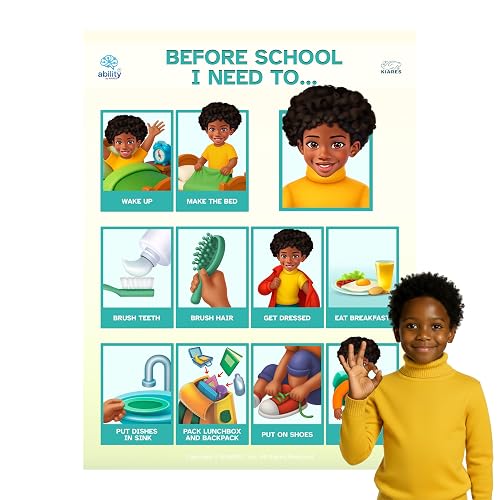 Best for getting dressedKIARES Morning Routine Chart for KidsView on Amazon
Our Top Picks
The table below gives a quick view. Each product has its own section after it.
| Product | Best for | Key feature |
|---|---|---|
| 2 in 1 Bedtime/Morning Routine Chart for Kids Toddlers | Families who want morning and bedtime on one chart | Magnetic, two-routine design |
| Upgraded Slider 3 in 1 Bedtime/Morning/Daily Routine Chart for Kids | Kids who like to move their own progress | Sliding indicator and magnetic pieces |
| Morning Routine Chart for Toddler | Toddlers and preschoolers ages 2 to 6 | Simple, large picture steps |
| Eight picture steps from waking up to grabbing a bag | Kids who need a full sequence on one sheet | Eight steps in order |
| Melissa & Doug My Daily Routines Chart | Families who prefer wood and a long-term setup | Wooden daytime and nighttime tracker |
| 6 PCS Daily Step Visual Schedules Night and Morning Routine Chart | Multiple kids or a set that can be rotated | Laminated, wipe-clean cards |
| KIARES Morning Routine Chart for Kids | Kids who struggle with getting dressed | Dressing-focused steps and stickers |
2 in 1 Bedtime/Morning Routine Chart for Kids Toddlers
2 in 1 Bedtime/Morning Routine Chart for Kids Toddlers, Magnetic Chore Chart for Kids, Cute Visual Schedule for Kids Schedule Board for Home, Kids Checklist to Do List ADHD Tools for Kids
Best for: Families who want one chart for both ends of the day.
This chart suits toddlers and young kids who need a clear, picture-first sequence. Parents who prefer a single system to manage bedtime and mornings will find it simple to set up.
Key specs:
- Two routines on one chart
- Magnetic pieces for easy moving
- Built for toddler-age reading
Pros:
- Covers morning and bedtime
- Easy for young children to handle
- Clear picture steps
Cons:
- Limited space for many steps
- Magnets need occasional checking
Bottom line: A strong pick for families who want one chart covering the whole day.
Upgraded Slider 3 in 1 Bedtime/Morning/Daily Routine Chart for Kids
Upgraded Slider 3 in 1 Bedtime/Morning/Daily Routine Chart for Kids, Magnetic Chore Chart for Kids, Visual Schedule for Kids Toddlers Schedule Board for Home
Best for: Kids who like to track their own progress.
The sliding design gives children a sense of ownership. It works well for early elementary kids who enjoy moving a piece from one step to the next.
Key specs:
- Three routine sections
- Sliding progress indicator
- Magnetic components
Pros:
- Engaging for kids
- Covers three routines
- Visual progress is easy to read
Cons:
- Sliders can stick over time
- Takes some setup
Bottom line: Good for kids who respond well to hands-on tracking.
Morning Routine Chart for Toddler
Morning Routine Chart for Toddler, Daily Routine Chart for Kids Age 2-6, Morning Schedule for Boy Girls, Visual Schedule, Chore Chart for Kids
Best for: Toddlers and preschoolers ages 2 to 6.
This chart is aimed at the youngest end of the range. Large, uncluttered pictures help children who are still building early reading skills.
Key specs:
- Designed for ages 2 to 6
- Simple daily steps
- Picture-only layout
Pros:
- Easy for very young children
- Uncluttered design
- Good starter chart
Cons:
- Fewer steps than larger sets
- May feel basic for older kids
Bottom line: Ideal for a first routine chart for a preschooler.
Eight picture steps from waking up to grabbing a bag
Eight picture steps from waking up to grabbing a bag(Unframed,08x12inch(20x30cm)) My Morning Routine Kids Poster – Educational Wall Chart
Best for: Kids who need the full morning sequence on one sheet.
Eight steps cover the path from bed to the front door. This works well for school-age children who can follow a longer list but still benefit from pictures.
Key specs:
- Eight picture steps
- Unframed print, 8 x 12 inches
- Covers waking up through leaving
Pros:
- Complete sequence
- Easy to hang or display
- Clear order of steps
Cons:
- Unframed, so needs a frame or lamination
- No built-in tracking
Bottom line: A good pick for a printed, full-sequence routine.
Melissa & Doug My Daily Routines Chart
Melissa & Doug My Daily Routines Chart, Wooden Daytime and Nighttime Habit Tracker with Multi-Lingual Stickers, Hands-On, Screen-Free Preschool Toys for Girls & Boys Ages 3+ – FSC Certified
Best for: Families who prefer a sturdy, long-term wooden chart.
A wooden habit tracker suits families who want a durable piece that can stay up for years. It covers both daytime and nighttime habits.
Key specs:
- Wooden construction
- Daytime and nighttime sections
- Multi-lingual labels
Pros:
- Sturdy and long-lasting
- Covers the full day
- Attractive for a shared space
Cons:
- Less flexible for changing routines
- Heavier to move around
Bottom line: Best for families who want a permanent, wooden setup.
6 PCS Daily Step Visual Schedules Night and Morning Routine Chart
6 PCS Daily Step Visual Schedules Night and Morning Routine Chart for Kids Laminated Children Self Care Chart Visual Guide for Children Special Needs and Autism Promotes Independent Hygiene Routine
Best for: Families with more than one child or a set that can be rotated.
Several laminated cards let you mix and match steps or give each child their own schedule. Laminated surfaces can be wiped clean and reused.
Key specs:
- Six laminated pieces
- Night and morning routines
- Wipe-clean surface
Pros:
- Flexible for multiple kids
- Reusable and wipeable
- Good value for a full set
Cons:
- Cards need a place to display
- Can be lost if not stored well
Bottom line: A practical choice for a household with several children.
KIARES Morning Routine Chart for Kids
KIARES Morning Routine Chart for Kids, Helping Kids Get Dressed, Daily Sticker Poster For Toddlers, Created by an Occupational Therapist (African American Boy)
Best for: Kids who stall at getting dressed.
The chart focuses on dressing and other early steps, with a sticker element to reward progress. It fits kids who need extra structure at the start of the day.
Key specs:
- Dressing-focused steps
- Daily sticker poster design
- Made for toddlers and young kids
Pros:
- Helps with getting dressed
- Sticker rewards motivate kids
- Clear picture layout
Cons:
- Stickers need replacing
- Narrower focus than full-day charts
Bottom line: A good fit for kids who need help with the dressing step.
Buying Guide
Choosing the right chart depends on your child’s age, how many steps you need and how you plan to use it. The factors below help narrow the field.
Age range and reading level
Toddlers respond to large, simple pictures with few steps. Older children can handle longer sequences and more detail. Match the number of steps to what your child can follow without help.
Good picks for this: Morning Routine Chart for Toddler; Eight picture steps from waking up to grabbing a bag.
Number of steps
Count the steps your morning really needs, from waking up to leaving the house. A chart with too many steps can overwhelm a young child, while too few leaves gaps. Aim for a set that covers your full sequence.
Good picks for this: Eight picture steps from waking up to grabbing a bag; 6 PCS Daily Step Visual Schedules.
Durability and material
Laminated paper wipes clean but can curl at the edges. Wood lasts longer and holds up to daily handling. Magnetic pieces are convenient but need checking for wear. Choose the material that fits how often the chart will move.
Good picks for this: Melissa & Doug My Daily Routines Chart; 6 PCS Daily Step Visual Schedules.
Flexibility and reuse
Some families want one chart for the whole day, while others want to swap steps for school days, weekends or summer. Look for sets that let you rearrange cards or reuse a sheet with a dry-erase or wipe-clean surface.
Good picks for this: Upgraded Slider 3 in 1 Bedtime/Morning/Daily Routine Chart; 2 in 1 Bedtime/Morning Routine Chart.
Specific struggles
If getting dressed or starting the day is the sticking point, choose a chart that targets those steps. A focused design can be easier to use than a general one, especially for kids who need extra structure.
Good picks for this: KIARES Morning Routine Chart for Kids; 2 in 1 Bedtime/Morning Routine Chart.
FAQ
How many steps should a morning routine chart have?
Most families do well with five to eight steps. Start with the tasks that take the most time or cause the most arguments, then add more only if your child can follow the list comfortably.
At what age can kids use picture charts?
Children as young as two can follow simple picture sequences with a parent’s help. By age five or six, most kids can work through a chart with less guidance.
Should the chart be placed at eye level?
Yes. Hang it where your child can see it while getting ready, such as the bedroom wall or bathroom door, and at a height they can reach to move pieces.
How do I keep a routine chart from being ignored?
Review the chart with your child each evening, praise completed steps, and keep the setup consistent. A chart works best when it becomes a normal part of the day.
Conclusion
For an all-in-one setup, the 2 in 1 Bedtime/Morning Routine Chart is a strong starting point. Toddlers do well with the Morning Routine Chart for Toddler, while families who want a permanent wooden piece should look at the Melissa & Doug chart. Kids who struggle with getting dressed may benefit most from the KIARES chart. Match the chart to your child’s age and the steps you need, and a picture routine can make mornings noticeably calmer.
Sources
- Guidance from the American Academy of Pediatrics on routines and daily structure for children (healthychildren.org)
- Information on child development milestones and early learning (cdc.gov)
Before you buy: helpful guides
Related reading
- Morning Routine for ADHD Kids: 7 Steps That Cut Down the Chaos
- Morning Routine Checklist for Kids: 7 Steps to Smoother School Days
- Morning Routine Chart for Kids: 7 Steps to a Setup They Actually Follow
About Emily Parker
Emily Parker is part of our editorial team and reviews and edits our busy-mom life guides, checking product details against manufacturer specifications and owner feedback.


