By Emily Parker
Updated November 2026
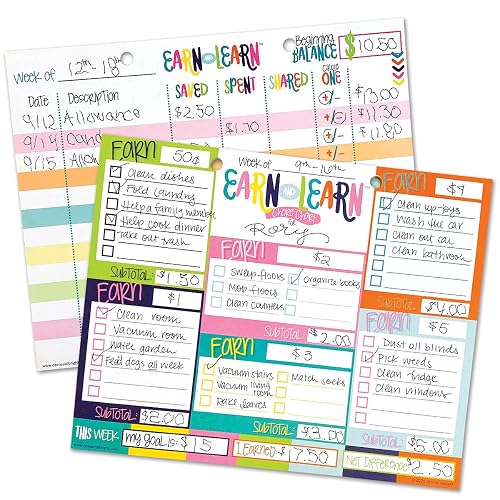
A work for hire chore chart printable lets your kids earn money by completing specific jobs around the house, and it gives you a simple tracking sheet you can print and hang up. In this guide, you’ll set up the chart from scratch: choosing paid tasks, assigning fair values, laying out the printable, and setting a payout schedule you can actually stick to. By the end, you’ll have a working system that teaches money skills without adding to your mental load.
What “Work for Hire” Means for Kids
Work for hire is a pay-per-task model. Instead of a flat weekly allowance, kids are paid for each job they complete to a standard, and extra jobs can be offered for extra money. It’s different from a standard chore chart, where chores are simply expected as part of family life. Many families use both: a short list of non-negotiable jobs that everyone does for free, and a separate paid list for bigger or optional work.
Shopping for one? See our guide: Free Printable Chore Chart with Money: 5 Best Options for Busy Families.
If you’re still deciding between approaches, the post Work for Hire Chore Chart: A Step-by-Step Setup for Busy Families walks through the basic framework. This guide focuses on the printable piece and how to make it work day to day.
Step 1: Sort Your Tasks Into Free and Paid Lists
Start by listing every recurring job in your house. Then split them into two groups. Free tasks are things every family member does to keep the home running, like making their bed, clearing their dishes, or putting away their own laundry. Paid tasks are the extra jobs that take more time or effort, like vacuuming the stairs, washing the car, or weeding a garden bed.
A good rule: if a task is needed for basic hygiene or daily living, it stays free. If it’s a job you’d otherwise hire out, it goes on the paid list.
Sample Task Sort
| Task | Category | Typical Time |
|---|---|---|
| Make bed | Free | 5 minutes |
| Clear own dishes | Free | 5 minutes |
| Vacuum one room | Paid | 15 minutes |
| Wipe bathroom sink and mirror | Paid | 10 minutes |
| Wash car exterior | Paid | 30 to 45 minutes |
| Rake leaves in yard | Paid | 30 minutes |
Step 2: Assign Fair Values to Each Paid Task
Pay rates should match effort, not just the clock. A good starting method is to estimate minutes, then decide what your child should earn per 15 minutes of focused work. Many families pick a base rate and adjust from there. Tasks that are unpleasant, physically demanding, or require skill can earn a bonus.
- Pick a base rate per 15 minutes of work (for example, a small, round amount your family agrees on).
- Multiply by the estimated time for each task.
- Round to a clean number that’s easy for kids to count.
- Review the list every few months and adjust for age and skill.
Keep the math simple. Younger kids should be able to add up a day’s earnings in their head or on their fingers.
Step 3: Design the Printable Layout
The printable should answer three questions at a glance: What can I earn? What have I done? What do I owe or have been paid? Keep the layout to one page if possible.
Essential Sections to Include
- Child’s name and week dates across the top
- A task list with a short description and the value for each job
- Checkbox or tally columns for each day of the week
- A running total box at the bottom
- A space for a parent initial to confirm completed jobs
Making It Readable for Younger Kids
For children who can’t read well yet, add small icons next to each task and use bold, large fonts. Color-code the paid tasks so they stand apart from free ones. If you want more visual options, the guide to Visual Chore Chart Free Printable: 7 Steps to a Setup Kids Can Read covers layouts that work well for pre-readers.
Choosing a Format
You can create a printable in a word processor, a spreadsheet, or a free design tool. If you want a head start, search for a template that already has a task grid and totals. Some families prefer a Weekly Chore Chart PDF: 7 Steps to a Printable Setup That Works they can fill in by hand, while others use an editable file so they can change task names and values each season.
Step 4: Set Up a Tracking and Payout Routine
The chart only works if you check it on a schedule. Decide on one payout day each week, often Friday or Sunday, and stick to it. Before payout, walk through the chart together and confirm each completed task. Kids learn quickly when they see the connection between effort and money, so involve them in the count.
A Simple Weekly Checklist
- Print a fresh chart each Monday and post it in a visible spot.
- Have your child tick off each paid task as it’s finished.
- Inspect completed jobs before initialing. Re-do anything that doesn’t meet the standard.
- Total the earnings on payout day and pay in cash or record it in a savings account.
- Note any tasks that need a new value or a clearer description.
Step 5: Build in Savings and Spending Rules
Work for hire becomes a money lesson when kids decide what to do with their earnings. Many families split each payout into three jars or categories: spend, save, and give. You can set the ratio to fit your goals. The key is consistency, so the rules don’t change every week.
Common Mistakes to Avoid
- Paying for everything. If every chore earns money, kids may stop helping without pay. Keep a core set of free tasks.
- Vague task descriptions. “Clean room” means different things to different people. Write specifics, like “make bed, pick up floor, dust dresser.”
- Skipping inspections. Paying for sloppy work teaches the wrong lesson. Set a standard and enforce it.
- Changing rates mid-week. Post the values before the week starts and keep them until the next review.
- Forgetting to print again. A faded or torn chart loses its value. Keep a fresh copy ready every week.
- Letting the payout day slip. If you skip payouts, kids lose faith in the system fast.
Tips for Making the System Last
- Review the task list every three months and add or remove jobs as your kids grow.
- Offer a bonus task on busy weeks, such as help with a big cleanup, so kids can earn more when they want to.
- Let older kids take on bigger jobs with higher values to build initiative.
- Keep the chart in the same place every week so it becomes part of the routine.
- If your child struggles with motivation, pair the chart with a short weekly goal, like saving for one specific item.
FAQ
What age is best to start a work for hire chore chart?
Many families start around age 5 or 6 with very simple tasks and a basic printable. Kids who can count to 20 or so can usually follow a chart with icons and short task names.
Should I pay for every chore?
No. Most families keep basic daily tasks like making a bed or clearing dishes as free expectations, and reserve paid work for extra or larger jobs. This helps kids understand that helping the household is part of belonging to it.
How often should I update the printable?
Print a fresh copy each week so the chart stays clear and accurate. Update the task list or values every few months, or when your child moves up an age group.
What if my child refuses to do a paid task?
Leave it unchecked and don’t pay for it. Let your child see that the task is still on the list and available the next time. Avoid nagging, since the chart is meant to do the reminding for you.
Can I use this system with more than one child?
Yes. Create a separate printable for each child, or use one sheet with columns for each name. Keep the task values the same for siblings of similar ages to avoid conflict.
How do I handle missed payouts or lost charts?
Keep a simple backup, such as a notebook or a digital copy of the chart. If a payout gets missed, make it up as soon as you can and get back on schedule that week.
Is a work for hire system a good way to teach money skills?
It can be. Kids practice earning, counting, saving, and spending in a real setting. For bigger questions about children’s finances or allowances, a family financial counselor can offer guidance tailored to your situation.
Conclusion
A work for hire chore chart printable turns everyday jobs into a clear, fair system your kids can follow. Sort your tasks, set reasonable values, design a simple one-page printable, and stick to a regular payout day. With a routine in place, the chart does much of the work for you and gives your kids a practical lesson in earning and saving.
Related reading
Ready to choose one?
About Emily Parker
Emily Parker is part of our editorial team and reviews and edits our busy-mom life guides, checking product details against manufacturer specifications and owner feedback.