By Emily Parker
Updated November 2026
A kindergarten 5 year-old chore chart works best when it has three to five simple tasks, pictures instead of words, and a fixed spot where your child checks it every day. Follow the steps below and you will have a working chart up within an hour, with tasks your child can finish mostly on their own. Most of the setup is deciding what to include, so start there.
Step 1: Pick 3 to 5 Tasks Your Child Can Finish Alone
At five, most kids can handle small, repeatable jobs without much help. Choose tasks they can complete from start to finish, such as putting shoes in the closet, feeding a pet, or setting out napkins at dinner. Skip anything that needs you to supervise every minute, like cooking or bathing a sibling. Three to five tasks is plenty. More than that and the chart starts to feel like a list of demands.
Shopping for one? See our guide: 7 Best Dry Erase Board Chore Charts for Busy Families (2026).
Step 2: Turn Each Task Into a Picture
Most five-year-olds read a few words but recognize pictures far faster. Draw each task, print a photo of it, or use clip art. Make the picture show the finished result, such as a bed with the blanket pulled up or a bowl beside a dog dish. Your child should be able to tell what is expected without asking you.
Step 3: Choose a Format Your Child Can Manage
Pick one of these three formats, depending on what you already have at home:
- Magnetic board: Each task gets a magnet. Your child moves it to a “done” column when finished.
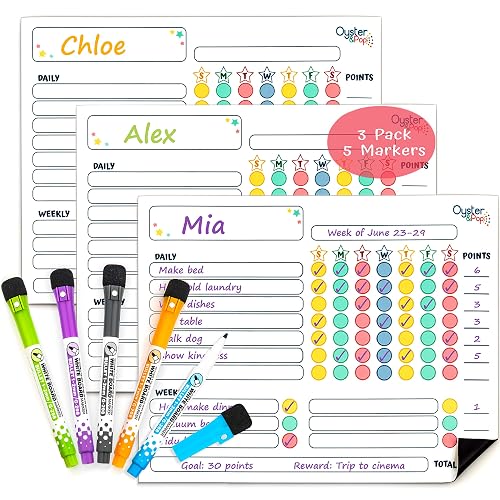
- Check-box grid: Columns are days of the week, rows are tasks. Your child colors or stamps a box.
- Clip chart: Each task has a clothespin or clip on a card. Moving it signals completion.
A magnetic board is the easiest to update, and kids tend to enjoy moving things around. Whichever you pick, put it at your child’s eye level, not on a high shelf.
Step 4: Set Up the Daily Routine
Consistency matters more than the chart itself. Tie each task to a fixed moment in the day: make the bed right after waking up, put toys away before lunch, and feed the pet before breakfast. Your child learns the sequence quickly when the chores follow the same order each day. For a broader look at how to organize routines around a schedule, see Weekly Chore Chart for Family: A Step-by-Step Setup for Busy Households.
Step 5: Add a Simple Reward Your Child Understands
At this age, a reward should be immediate and easy to picture. A sticker after finishing the full chart, a extra story at bedtime, or picking the Friday dinner dessert all work. Avoid giving money for every chore at this stage. Small, predictable praise keeps kids engaged better than complicated point systems. Many families also find that a short sticker chart paired with the chore chart makes the reward visible.
Step 6: Do a Five-Minute Check-In Each Evening
Sit down with your child for a few minutes after dinner or before bed. Look at the chart together, praise what is done, and reset anything left undone for the next day. Keep it brief and matter-of-fact. The goal is to build the habit of checking, not to lecture. If a task keeps getting skipped, shrink it to a smaller version rather than dropping the whole chart.
Step 7: Adjust Every Two Weeks
Once your child has the routine down, swap in a new task or increase the difficulty of an existing one. Kids at this age often master a chore in a few weeks and then need something new to stay interested. If you want more ideas for setups that suit a young child, Chore Chart Ideas for 5 Year Olds: 7 Setups That Work covers several layouts you can adapt.
Common Mistakes to Avoid
- Listing too many tasks at once. Start with three and add more only after the routine is solid.
- Using only words. Pictures are what most five-year-olds rely on.
- Checking the chart for them. Let your child move the magnet or mark the box, even if the result is messy.
- Changing the rewards constantly. Predictability helps kids trust the system.
- Expecting perfect results in week one. Most families need two to three weeks before the chart runs smoothly.
Recommended Gear
A sturdy magnetic board with a stack of magnets makes it easy to move tasks from “to do” to “done” without rewriting anything. Dry-erase boards are another option if you want to change tasks often. Clip-style cards work well for families who prefer a hands-on, tactile system.
- Magnetic chore chart board for kids: View on Amazon
- Dry-erase chore chart with picture icons: View on Amazon
- Wooden clothespin chore chart kit: View on Amazon
FAQ
How many chores should a 5-year-old have?
Three to five daily tasks is a good range for most kindergartners. Start with three and add more once your child completes them consistently for a couple of weeks.
What chores can a kindergartner do on their own?
Simple tasks like making the bed, putting shoes in the closet, feeding a pet with a pre-measured scoop, and setting out napkins are usually manageable. Anything involving heat, sharp objects or heavy lifting should stay with an adult.
Should I pay my 5-year-old for chores?
Many families prefer non-money rewards at this age, such as stickers, extra playtime or choosing a family activity. If you do use money, keep it simple and consistent. Talk with your own family’s values before choosing a system.
Conclusion
A kindergarten 5 year-old chore chart works when it has a few clear, picture-based tasks and a steady daily routine. Start small, check in briefly each evening, and adjust the tasks every couple of weeks as your child grows. Within a month, most kids can run much of the chart with only a quick reminder from you.
Related reading
- Chore Chart for 5 Year Olds: 7 Steps to One They'll Actually Use
- Work for Hire Chore Chart: A Step-by-Step Setup for Busy Families
- Work for Hire Chore Chart Printable: A Step-by-Step Setup for Busy Families
- Word Chore Chart Template: 7 Steps to a Printable Setup Your Family Will Use
Ready to choose one?
About Emily Parker
Emily Parker is part of our editorial team and reviews and edits our busy-mom life guides, checking product details against manufacturer specifications and owner feedback.