As an Amazon Associate I earn from qualifying purchases. This page may contain affiliate links.
A chore chart for teens works best when it gives older kids clear ownership of their tasks, visible deadlines and a simple way to check things off without a parent hovering nearby. Teenagers have bigger schedules than little kids do, with school, sports, part-time jobs and friends all competing for time. That means a chart built for a seven-year-old often falls flat by the second week. The picks below were chosen by comparing product specifications, brand reputation and the patterns owners commonly describe in reviews. Each one suits a slightly different household, so the buying guide that follows explains how to match a chart to your teen’s age, your wall space and how much structure your family actually wants.
Our Top Picks
Quick Comparison
| Product | Best for | Key feature |
|---|---|---|
| Melissa & Doug Magnetic Chore Chart | Families with younger teens and a mix of daily and weekly tasks | Magnetic tiles that move between columns |
| U Brands Magnetic Dry Erase Board | Teens who like to rewrite their schedule often | Large writing surface with magnetic backing |
| Ticket to Ride Chore Tracker Board | Families who want a game-like reward feel | Point tracking built into the layout |
| Command Dry Erase Adhesive Board | Renters who cannot drill into walls | Damage-free adhesive mounting |
| Cricut Chore Planner Bundle | Creative teens who enjoy customizing their planner | Customizable printable inserts |
| Hudson Street Weekly Planner Board | Teens with after-school activities and tight calendars | Weekly grid with room for appointments |
| Amazon Basics Mesh Pocket Organizer | Teens who manage paper task cards | Pockets for individual chore cards |
| Dry Erase Monthly Calendar Whiteboard | Teens who need to track recurring chores by date | Monthly grid for longer-range planning |
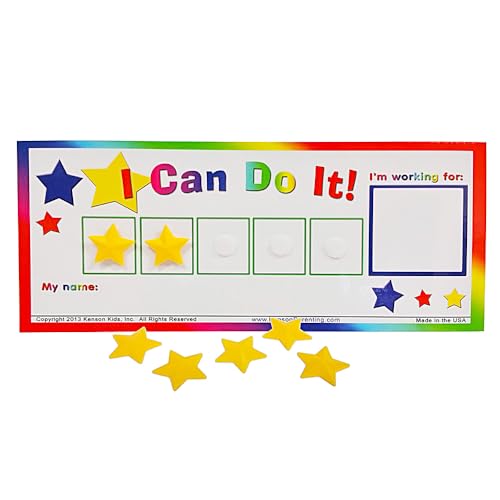
| Chore Chart Pad with Magnets Set | Families who want a low-commitment starting point | Tear-off sheets with a magnetic clip |
Melissa & Doug Magnetic Chore Chart
This is a good fit for families who want a visual system that younger teens can manage with minimal supervision. Its magnetic tiles let kids move tasks from “to do” to “done,” which gives a physical sense of progress that many teens still enjoy. It works well as a first chart before moving to a more adult-style planner.
Key specs
- Magnetic board with pre-printed chore categories
- Includes task magnets and a set of blank tiles for custom chores
- Designed for wall or fridge mounting
Pros
- Easy to understand at a glance
- Blank tiles allow custom teen-specific chores
- Satisfying physical movement of tiles
Cons
- Layout can feel childish for older teens
- Limited space for weekly or monthly planning
U Brands Magnetic Dry Erase Board
Families who want a blank canvas will appreciate this option. Teens can build their own columns, add custom task lists and erase everything when routines change. It suits households where chores shift often because of sports seasons or school schedules.
Key specs
- Magnetic dry erase writing surface
- Includes a marker tray and eraser
- Wall-mountable with included hardware
Pros
- Fully customizable layout
- Easy to erase and rewrite weekly
- Magnetic backing works with reminder notes
Cons
- Requires teen to set up the structure themselves
- Markers can dry out if left uncapped
Ticket to Ride Chore Tracker Board
This pick suits families who want chores to feel more like a game. Points or tallies add motivation, which can help when a teen is less interested in routine tasks. It works best with a clear reward plan agreed on in advance.
Key specs
- Board with space for points and task tracking
- Game-themed design
- Designed for tabletop or wall use
Pros
- Built-in motivation through points
- Appealing design for teens who like games
- Simple to explain and start using
Cons
- Point systems can lose appeal after a few months
- Not designed for detailed scheduling
Command Dry Erase Adhesive Board
Renters and families in homes with restrictions on wall damage often choose this type of mounting. The adhesive strips hold the board firmly when applied to a clean, smooth surface and can be removed without leaving marks, as long as the manufacturer’s instructions are followed.
Key specs
- Dry erase surface on an adhesive-mounted frame
- Damage-free removal when used as directed
- Suitable for smooth painted walls
Pros
- No drilling required
- Easy to reposition during a move
- Works well in dorm-style or shared rooms
Cons
- Adhesive performance depends on wall texture
- Heavier boards may need extra support
Cricut Chore Planner Bundle
Creative teens who enjoy decorating and personalizing their space may prefer a planner they can design. Printable inserts and customizable layouts make it easier to keep a chore system that reflects their own style, which often leads to better follow-through.
Key specs
- Customizable printable planner inserts
- Designed for use with craft cutting machines and printable materials
- Portable format for desk or wall
Pros
- Highly personalized
- Encourages teen ownership of the system
- Can be updated as schedules change
Cons
- Requires some setup time and materials
- Less useful for families who want a simple wall chart
Hudson Street Weekly Planner Board
Teens with busy after-school calendars often need more than a list of chores. A weekly grid lets them place chores next to practices, shifts and study time, which helps prevent overbooking. This type of board suits older teens who are starting to manage their own time.
Key specs
- Weekly grid layout with daily columns
- Dry erase or write-on surface
- Wall-mountable
Pros
- Combines chores with appointments
- Helps teens plan ahead
- Clear layout for daily check-ins
Cons
- Can feel crowded with many activities
- Requires weekly updates to stay useful
Amazon Basics Mesh Pocket Organizer
Some families prefer paper chore cards that can be moved, flipped or taken to a bedroom. A mesh pocket organizer holds individual tasks in a visible grid, which works well for teens who like to pick their chores from a set. It is a simple, low-tech option for households that want flexibility.
Key specs
- Mesh pocket grid for holding cards
- Wall or door mounting options
- Lightweight construction
Pros
- Simple to set up
- Easy to rotate cards weekly
- Works for bedroom or shared spaces
Cons
- Cards can get lost or bent over time
- Offers no built-in progress tracking
Dry Erase Monthly Calendar Whiteboard
Recurring chores such as yard work, laundry rotations or deep cleaning often need a longer view than a weekly chart provides. A monthly calendar board lets teens see when their turn comes around again and plan around busy weeks.
Key specs
- Monthly calendar grid on dry erase surface
- Room for notes in each date box
- Wall-mountable
Pros
- Good for tracking recurring chores
- Shows the bigger picture for planning
- Easy to update each month
Cons
- Not ideal for daily checkoffs
- Small date boxes can fill up quickly
Chore Chart Pad with Magnets Set
For families who want to test a system before committing to a permanent board, a tear-off pad is a practical starting point. Each sheet can be posted on the fridge with a magnet and replaced weekly, making it easy to adjust the routine.
Key specs
- Tear-off chart sheets
- Included magnetic clips or magnets
- Fridge-friendly size
Pros
- Low commitment to start
- Easy to replace each week
- Inexpensive to keep refreshing
Cons
- Paper can wear out with handling
- Less durable than a permanent board
Buying Guide
Choosing a chore chart for a teenager is less about finding the most attractive design and more about matching the format to how your teen actually plans their day. A system that works for a middle schooler may be too childish for a sixteen-year-old, and a complicated planner may go untouched by a teen who only needs a short task list.
Selection Criteria
- Age and independence: Older teens usually want more autonomy and less visual “kid” styling.
- Visibility: The chart should sit where your teen passes it daily, such as a bedroom door, a hallway or the kitchen.
- Update effort: Consider how much time it takes to rewrite or reset each week.
- Mounting needs: Check whether you can drill into walls or need an adhesive or freestanding option.
- Scope: Decide whether you need daily tasks only or also weekly and monthly items.
Important Features
- A clear way to mark tasks as complete
- Space for both recurring and one-time chores
- A layout that matches your teen’s calendar, not just a list
- Materials that hold up to repeated erasing or handling
Specs to Check
Manufacturers typically list board dimensions, surface type (dry erase, magnetic or paper), mounting method and whether magnets or markers are included. Check these before buying, since a board that looks right in photos may be too small for your wall or too light to stay put with magnets.
Choosing by Need
- Simple daily tasks: A magnetic chart or pad works well.
- Frequent schedule changes: A dry erase board is more flexible.
- Busy activity calendars: A weekly or monthly planner helps teens see the whole picture.
- Renters: An adhesive-mounted option avoids wall damage.
- Motivation problems: A point-based or game-style board may help, with rewards agreed on up front.
Things to Watch Out For
- Charts that look great but are too complicated to update each week
- Adhesive mounts on textured or freshly painted walls, which may not hold
- Designs that feel babyish to a teen, which can lead them to ignore the system
For more on building a system teens will actually follow, see White Board Chore Chart: 7 Steps to a Setup Kids Actually Use and Sharing Chores as a Family: Age-Appropriate Tasks.
FAQ
What chores are appropriate for teens?
Most teens can handle laundry, dishes, vacuuming, yard work, meal prep help and basic cleaning of their own rooms. Tasks should match their ability and schedule, and it helps to rotate heavier jobs so no one feels overloaded.
How many chores should a teen have on the chart?
A common approach is to start with three to five daily or weekly tasks and adjust based on how busy the teen is. Adding too many items at once can make the chart feel like a punishment rather than a routine.
Should teens earn money for chores?
This depends on your family’s values. Some families separate required household chores from paid extra jobs, which helps teens understand the difference. Whatever you decide, state it clearly before the chart goes up.
What if my teen ignores the chart?
Check whether the chart is too complicated, too babyish or too hard to see. Sitting down together to adjust the tasks often works better than repeated reminders. If problems persist, a short family conversation about expectations can help.
Is a digital chore app better than a physical chart?
Digital tools can send reminders and track completion, but some teens respond better to a visible wall chart they see every day. Many families use both, with the physical chart for daily visibility and an app for longer-range reminders.
How often should I update the chore chart?
Most families review the chart weekly, often on a set day, and adjust for upcoming school or sports schedules. A quick monthly check can also help rotate recurring tasks fairly.
Can a chore chart help with stress or time management?
A clear routine can reduce last-minute scrambling and help teens see how their time fits together. If your teen seems overwhelmed by school or activities, a pediatrician or school counselor can offer support beyond household systems.
Conclusion
The right chore chart for teens depends on how your teen plans, how much visibility you want and whether you need a permanent board or something flexible. A magnetic chart suits younger teens who like tangible progress, while a dry erase board or weekly planner gives older teens room to manage their own schedules. Renters may prefer an adhesive-mounted board, and families who want to test the idea first can start with a tear-off pad. Start with a few clear tasks, review the system together each week and adjust as your teen’s responsibilities grow.