 By Emily Parker
Updated November 2026
Finding the best morning routine for boys usually comes down to one thing: a visual plan a kid can follow without a parent repeating every step. Busy mornings fall apart when a boy has to remember brushing teeth, getting dressed, eating breakfast and packing a backpack all at once. The products below are visual routine charts, magnetic schedule boards and step-by-step checklists meant to cut down on reminders. We picked them using manufacturer specifications, brand reputation and common owner feedback patterns. We did not test them ourselves, so check the details on each listing before you buy.
Our top picks at a glance
- 1
 TOP CHOICEBest overallMelissa & Doug My Daily Routines Chart, Wooden Daytime and Nighttime HView on Amazon
- 2
 TOP CHOICEBest for combined bedtime and morning use2 in 1 Bedtime/Morning Routine Chart for Kids Toddlers, Magnetic Chore Chart for KidsView on Amazon
- 3
 TOP CHOICEBest for adding a weekly chore layer3 in 1 Bedtime/Morning/Weekly Routine Chart for Kids, Magnetic Chore Chart for KidView on Amazon
- 4
 Best for rewarding progressMagnetic Bedtime/Morning Routine Chart & Reward Jar for KidsView on Amazon
- 5
 Best for kids who need step-by-step support6 PCS Daily Step Visual Schedules Night and Morning Routine Chart for Kids LaminatedView on Amazon
- 6
 Best for a sturdy laminated chartMorning Routine Chart for Kids – Step-by-Step Visual Schedule (9×12 Laminated)View on Amazon
- 7
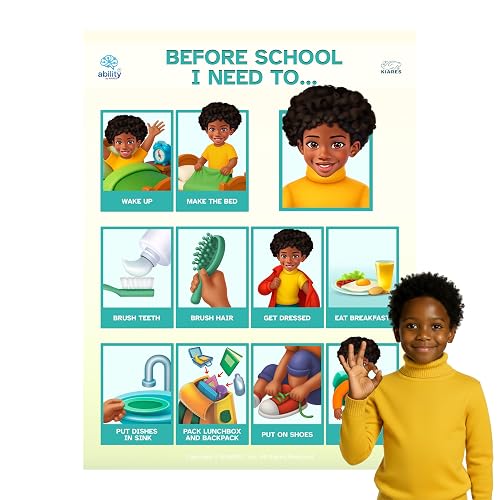 Best for dressing and getting readyKIARES Morning Routine Chart for Kids, Helping Kids Get Dressed, DailyView on Amazon
Our Top Picks
| Product | Best for | Key feature |
|---|---|---|
| Melissa & Doug My Daily Routines Chart | Daytime and nighttime habits in one wooden chart | Wooden board with reusable stickers, screen-free |
| 2 in 1 Bedtime/Morning Routine Chart for Kids | Families who want one board for both ends of the day | Magnetic visual schedule with a checklist layout |
| 3 in 1 Bedtime/Morning/Weekly Routine Chart for Kids | Boys who also need a weekly chore rotation | Magnetic board covering morning, bedtime and weekly tasks |
| Magnetic Bedtime/Morning Routine Chart & Reward Jar | Motivating a boy with small rewards | Dry erase surface and included reward jar |
| 6 PCS Daily Step Visual Schedules Night and Morning Routine Chart | Kids who need each step broken out | Six laminated cards for independent hygiene steps |
| Morning Routine Chart for Kids – 9×12 Laminated | A durable, wipe-clean wall chart | Laminated 9×12 step-by-step visual schedule |
| KIARES Morning Routine Chart for Kids | Getting dressed and ready without constant prompts | Sticker poster designed around getting dressed tasks |
Melissa & Doug My Daily Routines Chart, Wooden Daytime and Nighttime Habit Tracker with Multi-Lingual Stickers
Melissa & Doug My Daily Routines Chart, Wooden Daytime and Nighttime Habit Tracker with Multi-Lingual Stickers, Hands-On, Screen-Free Preschool Toys for Girls & Boys Ages 3+ – FSC Certified
Best for: Daytime and nighttime habits in one wooden chart
This is a good fit for families who want a classic, screen-free tracker that a preschool-age boy can handle with stickers. It works best when the goal is building simple daily habits rather than a long checklist.
Key specs
- Wooden habit tracker with daytime and nighttime sections
- Multi-lingual sticker set for reuse
- Listed for ages 3 and up
- FSC certified materials, per the listing name
Pros
- Covers both morning and bedtime habits on one board
- Stickers give kids a hands-on way to mark progress
- Sturdy wooden build suits a shared family space
Cons
- Sticker-based tracking has less room for long task lists
- Limited flexibility if routines change often
Bottom line: A strong first choice for a preschooler or early elementary boy who responds well to stickers and a simple, consistent board.
2 in 1 Bedtime/Morning Routine Chart for Kids Toddlers, Magnetic Chore Chart for Kids
2 in 1 Bedtime/Morning Routine Chart for Kids Toddlers, Magnetic Chore Chart for Kids, Cute Visual Schedule for Kids Schedule Board for Home, Kids Checklist to Do List ADHD Tools for Kids
Best for: Combined bedtime and morning use
This suits parents who want one magnetic board that switches between the morning sequence and the evening wind-down. It is aimed at toddlers and young children who learn from pictures.
Key specs
- Two routines on one magnetic board
- Visual schedule with picture-based steps
- Designed for home use
Pros
- One board covers both ends of the day
- Magnets make tasks easy to move and reset
- Picture cards work well for kids who are not reading yet
Cons
- Magnets can lose hold on some wall surfaces
- Older kids may find the layout too basic
Bottom line: Good for families with a young boy who needs both a morning and bedtime visual, all in one place.
3 in 1 Bedtime/Morning/Weekly Routine Chart for Kids, Magnetic Chore Chart for Kid
3 in 1 Bedtime/Morning/Weekly Routine Chart for Kids, Magnetic Chore Chart for Kid, Visual Schedule for Kid Toddlers Schedule Board for Home
Best for: Adding a weekly chore layer
This works for households that want chores included alongside the morning and bedtime routine. It is a good option when a boy is ready for a few weekly responsibilities.
Key specs
- Three routine sections: morning, bedtime and weekly
- Magnetic chore chart format
- Visual schedule for toddlers and young kids
Pros
- Combines daily routines with a weekly chore plan
- Magnetic pieces can be rearranged as needs change
- Useful for growing families with several children
Cons
- Three sections can feel crowded on a small board
- Weekly tasks need regular updating to stay current
Bottom line: The best pick for a family that wants morning routines and weekly chores tracked in one spot.
Magnetic Bedtime/Morning Routine Chart & Reward Jar for Kids
Magnetic Bedtime/Morning Routine Chart &Reward Jar for Kids -Toddler Morning Checklist Board,Daily Reward Routine Chart for Kids,Dry Erase Bedtime Reward Chart,Daily Schedule Chart at Home
Best for: Motivating a boy with small rewards
This one is aimed at parents who find that a plain checklist does not get results. The reward jar adds a built-in incentive for finishing the morning sequence on time.
Key specs
- Magnetic morning and bedtime routine chart
- Included reward jar for daily incentives
- Dry erase style surface for changing tasks
Pros
- The reward jar gives a clear reason to finish the routine
- Dry erase surface allows easy edits
- Works for both morning and bedtime
Cons
- Rewards need to be managed and refilled by a parent
- Dry erase markers wear out over time
Bottom line: A practical choice for a boy who responds to motivation and a small daily reward.
6 PCS Daily Step Visual Schedules Night and Morning Routine Chart for Kids Laminated
6 PCS Daily Step Visual Schedules Night and Morning Routine Chart for Kids Laminated Children Self Care Chart Visual Guide for Children Special Needs and Autism Promotes Independent Hygiene Routine
Best for: Kids who need each step broken out
This set suits families of children with special needs or autism, or any boy who gets stuck between steps. Each card isolates one action so the child can focus on one task at a time.
Key specs
- Six laminated visual schedule cards
- Covers night and morning self-care steps
- Designed to support independent hygiene routines
Pros
- Breaks routines into small, clear steps
- Laminated cards hold up to handling
- Supports independence with self-care tasks
Cons
- Cards need a place to display them clearly
- Six cards may be more detail than a simple routine needs
Bottom line: A strong choice when a boy needs each step visible, especially for self-care and hygiene.
Morning Routine Chart for Kids – Step-by-Step Visual Schedule (9×12 Laminated)
Morning Routine Chart for Kids – Step-by-Step Visual Schedule (9×12 Laminated) | Self-Care Educational Chart for Children, Special Needs & Autism – Morning Routine Support – English
Best for: A durable, wipe-clean wall chart
This is a good fit for families who want a single morning chart that can be wiped clean and reused for months. It targets kids who respond to a clear, ordered visual sequence.
Key specs
- 9×12 inch laminated format
- Step-by-step visual schedule layout
- Aimed at children, including special needs and autism support
Pros
- Laminated surface wipes clean
- Single, ordered sequence is easy to scan
- Suitable for wall mounting in a bathroom or hallway
Cons
- Fixed layout means no room to customize steps
- Needs wall space or a clip to display
Bottom line: A durable, low-fuss pick for a family that wants one reusable morning chart.
KIARES Morning Routine Chart for Kids, Helping Kids Get Dressed, Daily Sticker Poster For Toddlers
KIARES Morning Routine Chart for Kids, Helping Kids Get Dressed, Daily Sticker Poster For Toddlers, Created by an Occupational Therapist (African American Boy)
Best for: Getting dressed and ready without constant prompts
This chart is built around the getting-dressed portion of the morning, which is often where a boy stalls. It suits toddlers and preschoolers learning independence.
Key specs
- Sticker poster format for daily tracking
- Focused on getting dressed and morning tasks
- Listed for toddlers
Pros
- Clear focus on dressing steps
- Stickers give a sense of completion
- Simple layout for early readers
Cons
- Narrower scope than full-day routine charts
- Stickers need replacing once used up
Bottom line: The right pick if getting dressed is the main sticking point in your mornings.
Buying Guide
Visual format and reading level
Match the chart to how your son processes information. Picture-based cards work for children who are not reading yet, while text checklists suit kids who read well. A mix of pictures and short words often works for the middle years.
Good picks for this: 2 in 1 Bedtime/Morning Routine Chart for Kids, 6 PCS Daily Step Visual Schedules
Number of steps on the chart
Count the steps your son actually needs. Five to eight steps is a workable range for most mornings. Charts with too many steps can overwhelm a child, while too few leave gaps you will end up filling with reminders.
Good picks for this: Morning Routine Chart for Kids – 9×12 Laminated, KIARES Morning Routine Chart for Kids
Magnetic versus fixed layouts
Magnetic boards let you move tasks, swap in weekend routines or remove steps as your child gets more independent. Fixed laminated charts stay put and are simpler, but they cannot adapt. Decide whether you expect the routine to change within the next few months.
Good picks for this: 3 in 1 Bedtime/Morning/Weekly Routine Chart for Kids, Magnetic Bedtime/Morning Routine Chart & Reward Jar
Motivation and rewards
Some boys need a visible payoff. Stickers, a reward jar or a progress tracker can keep momentum going through the first few weeks. Plan what the reward will be before you start so the system stays consistent.
Good picks for this: Melissa & Doug My Daily Routines Chart, Magnetic Bedtime/Morning Routine Chart & Reward Jar
Durability and cleaning
Morning charts sit near bathrooms and kitchens, so they collect water spots and toothpaste. Laminated surfaces wipe clean and last longer than paper. Wooden boards are durable but need occasional dusting rather than wet wiping.
Good picks for this: Morning Routine Chart for Kids – 9×12 Laminated, Melissa & Doug My Daily Routines Chart
Placement and size
Mount the chart at your son’s eye level, roughly 4 to 5 feet off the floor, so he can see it without help. Measure the wall space first. A 9×12 inch chart fits a bathroom door or a narrow hallway, while larger boards need open wall space.
Good picks for this: KIARES Morning Routine Chart for Kids, 6 PCS Daily Step Visual Schedules
Special needs and sensory considerations
Children with autism or sensory differences often do better with consistent visuals, fewer decorative elements and clearly separated steps. If your child has specific needs, consider working with an occupational therapist or a qualified professional before choosing a system.
Good picks for this: 6 PCS Daily Step Visual Schedules Night and Morning Routine Chart, Morning Routine Chart for Kids – 9×12 Laminated
FAQ
What is the best morning routine for boys to start with?
Start with three to five steps your son can already do with minimal help, such as getting dressed, brushing teeth and eating breakfast. Add steps once he is consistent. Using a visual chart helps him see the order without repeated reminders.
At what age can a boy follow a visual routine chart?
Many children begin using picture-based charts around age 2 to 3, and they can follow simple sticker or checklist systems through the early school years. The right format depends on reading level and how much independence your child has.
How many steps should a morning routine chart include?
Most families find five to eight steps workable. More than that can feel overwhelming for a young child, so consider splitting a long routine into two charts if needed.
Should I use rewards with a morning routine?
Small, predictable rewards such as stickers or a reward jar can help a child stay motivated during the first few weeks. Many parents taper rewards over time as the routine becomes automatic.
Can a morning routine chart help with ADHD or autism?
Visual schedules are widely used to support children with ADHD, autism and other learning differences because they make expectations clear. They are a support tool, not a treatment. For a child with a diagnosis, consult a pediatrician, occupational therapist or other qualified professional about the right approach.
Where should I place the morning routine chart?
Put it where your son gets ready, such as the bathroom door or bedroom wall, at about eye level. Keep it visible but not cluttered, and make sure he can reach any movable pieces.
Conclusion
The best morning routine for boys depends on his age, reading level and what usually goes wrong in the mornings. For a single, all-around chart, the Melissa & Doug My Daily Routines Chart is a solid starting point. Families who want morning and bedtime on one board should look at the 2 in 1 Bedtime/Morning Routine Chart. If weekly chores belong in the same system, the 3 in 1 option fits. For motivation, the reward jar chart is the most direct choice, while the 6 PCS step cards suit kids who need each action broken out. The laminated 9×12 chart is the durable wall pick, and the KIARES chart focuses on getting dressed.
Sources
- Child development milestones and routines for young children (cdc.gov)
- Guidance from pediatricians on healthy daily routines, sleep and self-care for children (aap.org)
- Safety guidance for wall-mounted products and small parts around young children (cpsc.gov)
Related reading
- 7 Best Routine Chore Charts for Morning and Bedtime: Our Picks for Busy Families
- Morning and Night Routine Chart for Kids: 7 Steps to a Setup They Follow
- Morning Routine for ADHD Kids: 7 Steps That Cut Down the Chaos
- Morning Routine Checklist for Kids: 7 Steps to Smoother School Days
- Morning Routine Chart for Kids: 7 Steps to a Setup They Actually Follow
- Morning Chore Chart Template: 7 Steps to a Routine Kids Will Follow
About Emily Parker
Emily Parker is part of our editorial team and reviews and edits our busy-mom life guides, checking product details against manufacturer specifications and owner feedback.

