 By Emily Parker
Updated November 2026
A free morning routine for kids can be as simple as a printed checklist on the fridge, but many busy families want something sturdier and easier to follow without nagging. The seven options below are commercial routine charts, so they are not free, but they give you a visual system your kids can read on their own. We compared them on format (magnetic, wooden, laminated or dashboard), how many routines each covers, whether the steps are picture-based for non-readers, durability and how easily a chart can be reused or reset each day. Use this list as a shopping shortlist, or as a model for building your own free version at home.
Our top picks at a glance
- 1
 TOP CHOICEBest overallMelissa & Doug My Daily Routines ChartView on Amazon
- 2
 TOP CHOICEBest for toddlers2 in 1 Bedtime/Morning Routine Chart for Kids ToddlersView on Amazon
- 3
 TOP CHOICEBest for weekly planning3 in 1 Bedtime/Morning/Weekly Routine Chart for KidsView on Amazon
- 4
 Best magnetic setupMagnetic Bedtime/Morning Routine Chart for KidsView on Amazon
- 5
 Best laminated optionMorning Routine Chart for Kids (9×12 Laminated)View on Amazon
- 6
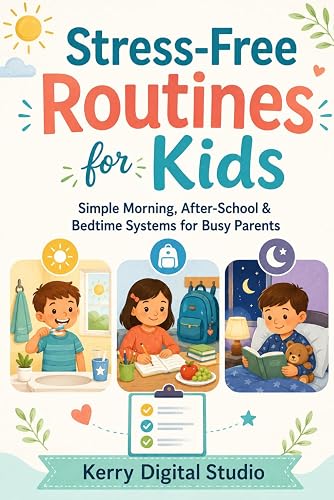 Best for parent guidanceStress-Free Routines for KidsView on Amazon
- 7
 Best dashboard layoutKids Routine Morning and Night Dashboard ChecklistView on Amazon
Our Top Picks
Quick Comparison
| Product | Best for | Key feature |
|---|---|---|
| Melissa & Doug My Daily Routines Chart | Daytime and nighttime habits | Wooden tracker with multi-language cards |
| 2 in 1 Bedtime/Morning Routine Chart | Toddlers | Magnetic, picture-based steps |
| 3 in 1 Bedtime/Morning/Weekly Routine Chart | Families wanting a weekly view | Adds a weekly section |
| Magnetic Bedtime/Morning Routine Chart | Reusable daily resets | Magnetic, dry-erase style |
| Morning Routine Chart (9×12 Laminated) | Step-by-step self-care | Laminated for wipe-clean use |
| Stress-Free Routines for Kids | Parents building a system | Guide with morning, after-school and bedtime routines |
| Kids Routine Morning and Night Dashboard Checklist | Checklist-minded kids | Dashboard layout with check-off spaces |
Melissa & Doug My Daily Routines Chart
Melissa & Doug My Daily Routines Chart, Wooden Daytime and Nighttime Habit Tracker with Multi-Lingual Stickers, Hands-On, Screen-Free Preschool Toys for Girls & Boys Ages 3+ – FSC Certified
Best for: Daytime and nighttime habits in one wooden tracker.
This chart suits families who want a sturdy, toy-like object that kids can move themselves. It covers both daytime and nighttime habits and includes multi-language cards.
Key specs:
- Wooden construction
- Separate daytime and nighttime sections
- Multi-language cards
Pros:
- Durable wood build
- Kids move the pieces themselves
- Covers day and night
Cons:
- Fewer detailed steps
- Less room for custom tasks
Bottom line: A good first chart for younger kids who like hands-on play.
2 in 1 Bedtime/Morning Routine Chart for Kids Toddlers
2 in 1 Bedtime/Morning Routine Chart for Kids Toddlers, Magnetic Chore Chart for Kids, Cute Visual Schedule for Kids Schedule Board for Home, Kids Checklist to Do List ADHD Tools for Kids
Best for: Toddlers who need picture-based morning steps.
This magnetic chart pairs morning and bedtime routines on one board. It works well for pre-readers who follow pictures more than words.
Key specs:
- Magnetic pieces
- Morning and bedtime sections
- Picture-based steps
Pros:
- Easy for pre-readers
- Magnets stay put
- Two routines in one
Cons:
- Limited space for extra tasks
- Magnets can be a choking hazard for very young children
Bottom line: Best for toddlers, with close supervision of small magnetic parts.
3 in 1 Bedtime/Morning/Weekly Routine Chart for Kids
3 in 1 Bedtime/Morning/Weekly Routine Chart for Kids, Magnetic Chore Chart for Kid, Visual Schedule for Kid Toddlers Schedule Board for Home
Best for: Families who want a weekly view alongside daily routines.
The third section adds a weekly layout, which helps with chores and activities that repeat on set days.
Key specs:
- Morning, bedtime and weekly sections
- Magnetic pieces
Pros:
- Covers the whole week
- Good for chore planning
- Visual and easy to scan
Cons:
- Can feel busy for young kids
- Requires a wall or fridge spot
Bottom line: Ideal if you want one board for daily and weekly tasks.
Magnetic Bedtime/Morning Routine Chart for Kids
Magnetic Bedtime/Morning Routine Chart for Kids -Toddler Daily Schedule Chart at Home,Morning Checklist,Dry Erase Bedtime Checklist to Do List,Daily Routine Chore Chart for Kids
Best for: Daily resets with reusable magnetic pieces.
This chart is built for reuse, so you can move the magnets each morning and start fresh. It includes a morning checklist and a daily schedule layout.
Key specs:
- Magnetic pieces
- Morning checklist
- Daily schedule layout
Pros:
- Reusable every day
- Simple to reset
- Clear checklist format
Cons:
- Magnets can slip off a metal-free surface
- Fewer pictures than some options
Bottom line: A practical pick for parents who want a daily reset habit.
Morning Routine Chart for Kids (9×12 Laminated)
Morning Routine Chart for Kids – Step-by-Step Visual Schedule (9×12 Laminated) | Self-Care Educational Chart for Children, Special Needs & Autism – Morning Routine Support – English
Best for: Step-by-step self-care routines that wipe clean.
The laminated surface lets you use dry-erase markers and wipe the chart clean. The step-by-step format suits kids learning to dress, brush teeth and pack up on their own.
Key specs:
- 9×12 inch size
- Laminated surface
- Step-by-step visuals
Pros:
- Wipe-clean surface
- Clear step-by-step visuals
- Compact size
Cons:
- Needs a hanging spot
- Single routine focus
Bottom line: Good for kids building self-care habits one step at a time.
Stress-Free Routines for Kids
Stress-Free Routines for Kids: Simple Morning, After-School & Bedtime Systems for Busy Parents
Best for: Parents who want a written system, not just a chart.
This is a guide rather than a physical board. It lays out simple morning, after-school and bedtime systems for busy households, which helps if your routine keeps breaking down.
Key specs:
- Morning, after-school and bedtime systems
- Written parent guidance
Pros:
- Covers the whole day
- Practical for busy parents
- Useful even without a chart
Cons:
- Not a visual tool for kids
- Needs setup time
Bottom line: Pair it with any chart above if you need the planning help.
Kids Routine Morning and Night Dashboard Checklist
Kids Routine Morning and Night Dashboard Checklist
Best for: Kids who like checking off tasks.
The dashboard layout gives each task its own check-off space, which suits older kids who respond to seeing progress build up.
Key specs:
- Morning and night sections
- Check-off spaces for each task
Pros:
- Shows progress clearly
- Covers morning and night
- Easy to scan
Cons:
- Text-heavy for pre-readers
- Needs regular reset
Bottom line: Best for early readers who enjoy checklists.
Buying Guide
Format: magnetic, laminated, wooden or dashboard
Magnetic charts are easy to reset each day, while laminated boards wipe clean with dry-erase markers. Wooden trackers hold up well to rough handling. Dashboards suit kids who respond to checklists. Choose the format your kids will actually touch.
Good picks for this: Magnetic Bedtime/Morning Routine Chart for Kids and Morning Routine Chart for Kids (9×12 Laminated)
Picture-based steps for pre-readers
If your child cannot read yet, look for charts with clear pictures for each step. Picture cues let young kids work through the routine without asking what comes next, which cuts down on repeated reminders.
Good picks for this: 2 in 1 Bedtime/Morning Routine Chart for Kids Toddlers and Melissa & Doug My Daily Routines Chart
Coverage: morning only or the whole day
Some charts cover just mornings, while others add bedtime or weekly tasks. Decide whether you want one board for everything or separate tools for each part of the day, and check how many sections the chart has before buying.
Good picks for this: 3 in 1 Bedtime/Morning/Weekly Routine Chart for Kids and Stress-Free Routines for Kids
Size and placement
Measure the wall or fridge space before ordering. A 9×12 inch chart fits a small spot, while larger boards need more room. Hang the chart at your child’s eye level so they can see it without help from you.
Good picks for this: Morning Routine Chart for Kids (9×12 Laminated) and Kids Routine Morning and Night Dashboard Checklist
Safety for young children
Magnetic pieces are small and can be a choking hazard for toddlers. Check the age guidance on any product and supervise closely. For guidance on toy and product safety, see the Consumer Product Safety Commission.
Good picks for this: Melissa & Doug My Daily Routines Chart for wooden pieces, or the laminated chart for a no-magnet option
FAQ
Can I make a free morning routine for kids at home?
Yes. Draw or print each step on paper, tape it to the fridge, and let your child move a clip or check a box as each task is done. Use the same order each day so the routine becomes automatic over a few weeks.
What age should kids start a morning routine?
Many children can follow a simple picture routine from around age three. Start with two or three steps, then add more as they master each one. Adjust the number of steps to your child’s pace.
Do magnetic charts work for toddlers?
They can, but magnetic pieces are small and may be a choking hazard. Supervise closely and check the manufacturer’s age guidance before use.
How often should I update the routine?
Review the routine every few weeks. Remove steps your child has mastered and add new ones gradually. Keeping changes small helps the routine stick.
What if my child ignores the chart?
Start with a short routine and praise each completed step. Visual charts work best when they are part of a calm, consistent habit, so reduce reminders and let the chart do the prompting.
Conclusion
For most families, a visual chart is the simplest way to build a morning routine that runs without constant reminders. The Melissa & Doug wooden tracker suits daytime and nighttime habits, while the 2 in 1 toddler chart fits pre-readers. Families wanting a weekly view should consider the 3 in 1 chart, and the laminated board works well for step-by-step self-care. Match the format to your child’s age and your wall space, and you will have a routine that sticks.
Sources
- Product safety guidance for toys and small parts for young children (cpsc.gov)
- Child development milestones and routines for young children (cdc.gov)
Before you buy: helpful guides
Related reading
- Morning Routine for ADHD Kids: 7 Steps That Cut Down the Chaos
- Morning Routine Checklist for Kids: 7 Steps to Smoother School Days
- Morning Routine Chart for Kids: 7 Steps to a Setup They Actually Follow
About Emily Parker
Emily Parker is part of our editorial team and reviews and edits our busy-mom life guides, checking product details against manufacturer specifications and owner feedback.


