 By Emily Parker
Updated November 2026
Finding the best kids lunch ideas for toddlers is harder than it sounds. Toddlers want foods they can grip, foods they recognize, and foods that don’t leak or crumble across the bottom of a lunch bag. Busy parents need recipes they can actually assemble before the school run, plus containers that survive daycare cubbies and car rides. This guide covers six products that address those needs. The selection criteria were practical: the scope and clarity of the recipes and meal plans, the suitability of the portion sizes for toddlers, the reputation of the publisher or brand, the durability and ease of cleaning for containers, and the patterns owners commonly report after using each item.
Our top picks at a glance
- 1
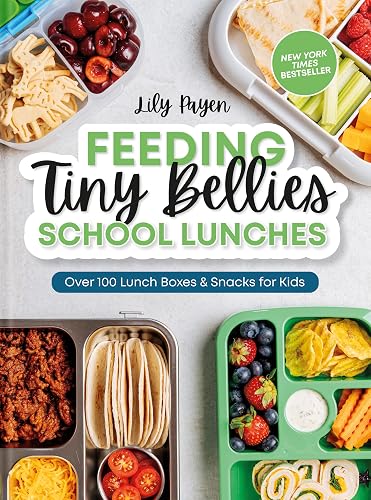 TOP CHOICEBest overallFeeding Tiny Bellies: School LunchesView on Amazon
- 2
 TOP CHOICEBest for meal planningFeeding Littles LunchesView on Amazon
- 3
 TOP CHOICEBest for daycare routinesLunchbox Cookbook for ToddlersView on Amazon
- 4
 Best snack add-onEarth's Best Organic Kids Snacks, Sesame Street Veggie StrawsView on Amazon
- 5
 Best for sandwichesSandwich Cutter and Sealer, Sandwich Cutter for Kids 5 PCSView on Amazon
- 6
 Best budget pick for portionsReusable Easy Open Toddler Snack Containers with Silicone LidsView on Amazon
Note: Product details below are based on manufacturer listings, publisher descriptions and common owner feedback. We have not tested these items ourselves.
Our Top Picks
Quick Comparison
| Product | Best for | Key feature |
|---|---|---|
| Feeding Tiny Bellies: School Lunches | Broad lunch variety | Over 100 lunch box and snack ideas |
| Feeding Littles Lunches | Weekly meal planning | 75+ no-stress lunch recipes |
| Lunchbox Cookbook for Toddlers | Daycare and preschool packing | 30-day meal plan included |
| Earth’s Best Organic Veggie Straws | Easy extra snack | Single-serve organic snack bags |
| Sandwich Cutter and Sealer Set | Fun shaped sandwiches | Five cutter shapes with sealing edge |
| Reusable Toddler Snack Containers | Portion control | Stackable 8 oz silicone-lid containers |
Feeding Tiny Bellies: School Lunches
Feeding Tiny Bellies: School Lunches: Over 100 Lunch Boxes and Snacks for Kids
Best for: Parents who want the widest range of lunch box ideas in one book.
This cookbook suits parents who run out of ideas by Wednesday. Its breadth of over 100 lunch and snack suggestions makes it useful for rotating menus across a school or daycare week.
Key specs
- Format: cookbook covering lunch boxes and snacks
- Focus: young children, school and daycare packing
- Over 100 lunch box and snack ideas
Pros
- Large number of ideas reduces repetition
- Covers both full lunches and snacks
- Useful for building a rotating weekly menu
Cons
- Some recipes may need adjusting for very young toddlers
- Print cookbooks take up kitchen counter space
Bottom line: A strong pick for parents who want variety and a single reference for school-style lunches.
Feeding Littles Lunches
Feeding Littles Lunches: 75+ No-Stress Lunches Everyone Will Love: Meal Planning for Kids
Best for: Families who prefer planning lunches in advance.
Owners often describe this book as a planning resource rather than a list of recipes. It fits parents who like to batch-prep on the weekend and need simple, low-stress combinations.
Key specs
- Format: meal planning book for kids’ lunches
- Includes more than 75 lunch recipes
Pros
- Built around low-stress, repeatable combinations
- Good structure for weekly planning
- Recipes are described as family-friendly
Cons
- Less focused on the specific needs of toddlers under three
- Requires some kitchen prep time for certain recipes
Bottom line: Best for parents who want a planning-first approach and simple, reliable lunch rotations.
Lunchbox Cookbook for Toddlers
Lunchbox Cookbook for Toddlers: Easy, Nutritious Lunches and Snacks for Daycare, Preschool and Busy Days with a 30-Day Meal Plan
Best for: Parents packing for daycare or preschool on tight schedules.
The title points directly at toddlers and group care settings. The included 30-day meal plan gives a ready-made starting point, which many busy parents find helpful in the first weeks of a new routine.
Key specs
- Format: cookbook for toddler lunches and snacks
- Includes a 30-day meal plan
- Written for daycare, preschool and busy days
Pros
- Toddler-specific focus
- Ready-made 30-day plan removes planning decisions
- Suits group care packing rules
Cons
- Meal plan may not match every family’s food preferences
- Some items may need checking against daycare allergy policies
Bottom line: A good match for toddler-focused parents who want a structured month of lunches.
Earth’s Best Organic Kids Snacks, Sesame Street Veggie Straws
Earth's Best Organic Kids Snacks, Sesame Street Toddler Snacks, Organic Garden Veggie Straws for Toddlers 2 Years and Older, Original, Multipack, .5 oz Bags, 12 Count
Best for: A ready-to-pack snack that adds crunch to a lunch box.
This product is a convenience item rather than a recipe source. It works well as the snack portion of a lunch, especially on mornings when there is no time for prep.
Key specs
- Brand: Earth’s Best organic kids snacks
- Sesame Street character packaging
- Multipack of 12 single-serve bags, approximately 0.5 oz each
- Labeled for toddlers 2 years and older
Pros
- Single-serve bags make portioning simple
- Labeled for toddlers two and up
- Shelf-stable and easy to tuck into any lunch
Cons
- Snack only, not a full meal
- Crunchy texture may not suit toddlers still learning to chew
Bottom line: Useful for parents who need a quick, portion-controlled snack to round out lunch.
Sandwich Cutter and Sealer, Sandwich Cutter for Kids 5 PCS
Sandwich Cutter and Sealer, Sandwich Cutter for Kids 5 PCS(BIG), Decruster Sandwich Maker, Great for Lunchbox and Bento Box – Boys and Girls Kids Lunch
Best for: Making sandwiches more appealing with shapes and sealed edges.
Kids often respond better to a shaped sandwich than a plain square. This set is aimed at families who pack sandwiches regularly and want to cut crusts and seal edges in one step.
Key specs
- Five-piece set (listing name indicates 5 PCS)
- Designed for sandwiches in lunch boxes and bento boxes
- Includes sealing function for edges
Pros
- Shapes encourage eating for picky toddlers
- Sealing edges can keep fillings contained
- Works for bento-style packing
Cons
- Best with soft bread; tougher loaves may not cut cleanly
- Small parts need hand washing and drying
Bottom line: A practical tool for parents whose toddlers respond to fun shapes and neat sandwiches.
Reusable Easy Open Toddler Snack Containers with Silicone Lids
Reusable Easy Open Toddler Snack Containers with Silicone Lids | Stackable Toddler Lunch Box for Daycare, School and Travel 8oz (1 CUP) Small Stainless Steel Snack Containers for Kids (4pack)
Best for: Controlling portion sizes and keeping snacks separate in a lunch box.
Small containers help parents avoid overpacking and make it easier for toddlers to open their own snacks. The stackable design is aimed at daycare, school and travel.
Key specs
- Capacity: 8 oz (1 cup) per container
- Pack of 4 containers
- Silicone lids with easy-open design
- Stackable for compact storage
Pros
- Easy-open lids suit small hands
- Stackable for lunch bags and cubbies
- Clear sizing for portion control
Cons
- Silicone lids can hold odors over time
- Only one size, so larger lunches need additional containers
Bottom line: A sensible choice for parents who want separate, easy-open containers for snacks and sides.
Buying Guide
Age-appropriate textures and sizes
Toddlers under three often need soft, bite-sized pieces. Cut round foods such as grapes, cherry tomatoes and sausage into quarters lengthwise, and avoid whole nuts, popcorn and hard raw vegetables. Check any recipe or snack label for choking-hazard guidance, and follow your pediatrician’s advice on food introduction.
Good picks for this: Lunchbox Cookbook for Toddlers, Earth’s Best Organic Veggie Straws
Recipe variety and rotation
A good lunch resource gives you enough combinations to avoid serving the same meal every day. Aim for a rotation of at least six lunch formats, such as bento boxes, wraps, pasta salads, soup-and-sandwich combinations, and finger-food plates, so you can repeat a menu on a two-week cycle.
Good picks for this: Feeding Tiny Bellies: School Lunches, Feeding Littles Lunches
Portion control and container size
Toddlers usually eat small amounts at each sitting. Containers around 4 to 8 oz work well for fruit, vegetables and crackers. Pack two or three small containers instead of one large one so foods stay separated and fresh-looking when the lid is opened.
Good picks for this: Reusable Easy Open Toddler Snack Containers, Earth’s Best Organic Veggie Straws
Ease of opening and handling
A container that a three-year-old can open without help saves time at lunch and encourages independence. Look for lids with simple tabs or levers, and test them at home before the first day of daycare. Owners often report that lids with thick grips are easier for small hands.
Good picks for this: Reusable Easy Open Toddler Snack Containers
Shape and presentation tools
Shaped sandwiches and cut fruit can make a plain lunch more appealing. Cutters with sealing edges help keep fillings in place. Check that the cutter is dishwasher-safe or easy to hand wash, since small parts collect food.
Good picks for this: Sandwich Cutter and Sealer Set
Durability and cleaning
Lunch containers spend most of their life in cubbies, backpacks and dishwashers. Choose BPA-free, food-grade materials and check whether lids separate for cleaning. Silicone lids need periodic deep cleaning to prevent odor buildup.
Good picks for this: Reusable Easy Open Toddler Snack Containers, Sandwich Cutter and Sealer Set
Planning time and meal prep
How much time you have each morning should guide your choice of resource. If you have 10 minutes, a snack and a sandwich may be enough. If you can prep on Sunday, a planning book with batch-friendly recipes will save more time across the week.
Good picks for this: Feeding Littles Lunches, Lunchbox Cookbook for Toddlers
FAQ
What should a toddler lunch include?
A balanced toddler lunch usually includes a protein source, a grain or starch, a fruit or vegetable, and a dairy or dairy alternative. Serve foods in small, soft, bite-sized pieces. Pediatric nutrition guidance is a good starting point for portion sizes.
How much should a toddler eat at lunch?
Toddler portions are small, often a few tablespoons of each food. Start with small servings and offer more if the child is still hungry. Appetites vary from day to day, so a full lunch box is not always eaten.
Are cookbooks for toddler lunches worth it?
They can be, especially if you struggle to think of new ideas. A cookbook gives you tested-style recipes and structure, while a planning book helps you organize your week. Choose one that matches your time and cooking skill.
How do I keep toddler lunches safe at daycare?
Use insulated bags with ice packs for perishable foods such as yogurt, cheese and meat. Follow your daycare’s allergy and food rules, which may restrict nuts or certain packaged snacks. Consult your child’s pediatrician or the daycare director with any questions about safety.
Do silicone snack containers need special care?
Most can go in the dishwasher on the top rack, though manufacturers’ instructions vary. Wash lids promptly after use and air-dry them fully to reduce odor. Replace containers that are cracked, torn or permanently stained.
Can I reuse lunch containers every day?
Yes, reusable containers are designed for daily use. Wash them after every lunch, and check for wear around seals and lids. Replace any container that no longer seals properly.
Conclusion
The best kids lunch ideas for toddlers come down to matching the right tool to your routine. For broad variety, Feeding Tiny Bellies: School Lunches is a strong starting point. Parents who prefer planning ahead will find Feeding Littles Lunches useful. For toddler-focused daycare packing, the Lunchbox Cookbook for Toddlers offers a structured month. The Earth’s Best veggie straws, the sandwich cutter set and the reusable snack containers each solve a specific packing problem. Pick the one or two that address your biggest daily hurdle.
Sources
- Age-based feeding guidance, portion sizes and food safety advice for young children (healthychildren.org)
- Information on childhood nutrition, choking prevention and infant and toddler feeding (cdc.gov)
- Food safety guidance on food storage, packing and food-contact materials (fda.gov)
Before you buy: helpful guides
Related reading
- 6 Best South African School Lunch Ideas for Primary School Kids (2026)
- 6 Best Kids Lunch Ideas for Allergies: Picks for Safe Packed Lunches
- 6 Best Bentgo Kids Lunch Ideas Boxes for Busy Parents (2026)
About Emily Parker
Emily Parker is part of our editorial team and reviews and edits our busy-mom life guides, checking product details against manufacturer specifications and owner feedback.


