By Emily Parker
Updated November 2026
If you are looking for ideas for making a chore chart, you are probably tired of reminding the same kids to empty the dishwasher for the fifth time this week. A good chore chart fixes that by turning vague requests into a visible, predictable routine. In this guide, you will pick a format that fits your home, decide which tasks belong on it, set up rewards or consequences, and run a short weekly check-in so the system keeps working after the first excited week.
Start With Your Family’s Real Chore Load
Before you choose a layout, write down every recurring task your household handles. Most families are surprised by how long this list gets once they include the invisible work, like restocking toilet paper or feeding the dog. Walk through a typical weekday and a typical weekend and capture everything.
Shopping for one? See our guide: 7 Best Chore Charts for Husband Ideas That Actually Get Done (2026).
- Write every daily task (making beds, clearing plates, feeding pets, packing backpacks).
- Add weekly tasks (vacuuming a room, cleaning bathrooms, changing sheets, taking out recycling).
- Mark which tasks are age-appropriate for each person. A 6-year-old can match socks; a 12-year-old can run the vacuum.
- Estimate minutes for each task. A rough number helps you balance workloads so one child is not stuck with 90 minutes while a sibling gets 10.
Once you have the list, cut anything that does not need doing every week. A chart with 12 tasks is easier to follow than one with 30.
Eight Chore Chart Ideas You Can Actually Build
Each of these formats works well for different ages and home setups. Pick one, then adjust it to fit your family.
1. Magnetic Whiteboard Grid
Draw a grid with days across the top and names down the side. Use dry-erase markers for weekly tasks and magnets with names for quick swaps. This works especially well on a fridge or in a kitchen where everyone passes through.
2. Color-Coded Card Pocket Chart
Assign each child a color and make task cards in matching colors. Each morning, cards move from the “To Do” pocket to the “Done” pocket. Pre-readers can rely on colors and pictures instead of words.
3. Clip-Chart System
List tasks on a board with a clip beside each one. Children move their clip from “not done” to “done” as they finish. Many families add a bonus column for tasks finished before a set time.
4. Rotating Job Wheel
Write chores on a circular card and rotate who gets which job each week. Rotation prevents the “I always get the bathroom” argument and gives every child a chance to learn each task.
5. Digital Shared Calendar
Use a shared family calendar app and create recurring chore events with checkboxes or notes. Teens and adults who live by their phones often respond better to this format than to paper.
6. Chore Jar or Task Lottery
Write tasks on slips of paper and let each child draw one or two each day. The randomness keeps things lively, and it works well for summer routines when schedules are looser.
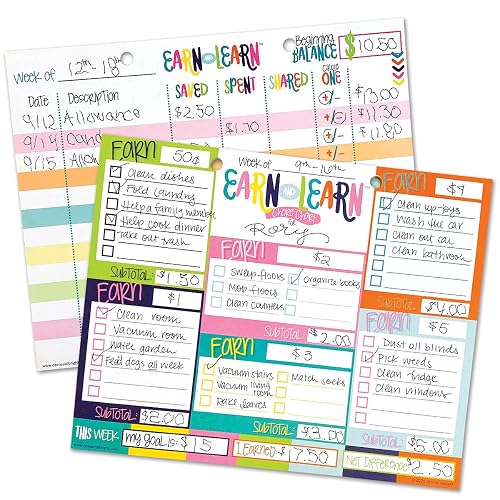
7. Printable Weekly Sheet
Print a one-page chart with checkboxes for each day. Laminate it or slide it into a sheet protector so kids can check items off with a wipe-clean marker. This is the lowest-cost option and easy to reprint when tasks change.
8. Chalkboard Wall Board
Paint or mount a chalkboard panel and use it as a permanent routine board. Morning tasks go on one side and evening tasks on the other. Chalk is easy to update when your family’s needs shift.
Choose the Right Format for Each Age
Age changes what works. The table below shows a practical starting point, though you know your kids best.
| Age Group | Best Format | Tasks to Include | Check-In Style |
|---|---|---|---|
| Ages 3–5 | Picture-based pocket chart or clip chart | Put shoes away, feed pet with help, make bed | Adult checks each task together |
| Ages 6–8 | Color-coded cards or magnetic grid | Set table, sort laundry, clear plate | Quick daily review at dinner |
| Ages 9–12 | Printable weekly sheet or clip chart | Vacuum, empty dishwasher, fold towels | Weekly sit-down review |
| Teens | Digital calendar or rotating schedule | Cook one dinner, clean bathroom, mow lawn | Self-check with weekly accountability |
Set Up Rewards and Consequences That Make Sense
A chart is only as strong as the habit it builds. Decide ahead of time what happens when tasks are done and when they are not. Many families link chores to a small weekly allowance, screen time, or privileges. Others keep chores separate from money entirely and treat them as a basic family duty. Either approach can work, as long as the rule is clear and consistent.
If you tie chores to allowance, consider the ideas in Chore Chart and Allowance Ideas: 7 Systems Busy Families Can Set Up This Week for structures that scale with age. For younger children, small non-food rewards like stickers or a family movie night tend to hold attention longer than big prizes. You can also explore Ideas for Chore Chart Rewards: 12 Options Kids Actually Want for a wider list.
A Step-by-Step Setup Plan
- Pick one format. Do not combine three systems in week one.
- Assign tasks. Give each person three to five daily tasks and two to three weekly tasks, adjusted for age.
- Write the rules on the chart. Include what counts as “done” (for example, beds made with pillows arranged, not just covers pulled up).
- Walk through the first week together. Do each task side by side the first few times.
- Hold a 10-minute weekly review. Check what was finished, celebrate wins, and adjust tasks that are too big or too small.
- Rotate or refresh every four to six weeks. Routine fades when it never changes.
Recommended gear
A few simple supplies make a chore chart easier to build and maintain.
- Dry-erase magnetic board – A wipe-clean surface lets you update tasks without reprinting. View on Amazon
- Clip chart kit with labels – Clips and labels make it easy for younger kids to track their progress on their own. View on Amazon
- Laminating sheets or sheet protectors – These keep printed charts usable through months of daily check-offs. View on Amazon
- Wipe-clean marker set – Fine-tip markers in several colors help you color-code each person’s tasks. View on Amazon
Common Mistakes
- Too many tasks at once. Start small. You can always add more later.
- Vague instructions. “Clean your room” means something different to every person. Break it into specific steps.
- No follow-through. If a task goes unchecked and nothing happens, the chart stops meaning anything. Build in a consequence or a check-in.
- Letting one child carry the load. Compare minutes and difficulty across the family before you finalize assignments.
- Never updating the chart. Kids grow, schedules change, and old systems lose their appeal.
Tips for Making It Stick
- Attach chores to existing routines, like clearing plates right after dinner.
- Use a timer for 10-minute “power cleanups” so tasks feel bounded.
- Let children choose between two or three equivalent tasks to build buy-in.
- Praise the effort, not just the finished result, especially for younger kids.
- If you are short on time, look at Weekly Chore Chart Printable: A Step-by-Step Setup for Busy Families for a fast starting template.
FAQ
What is the best format for a chore chart?
The best format is the one your family will check every day. For young children, pictures and clips work well. For older kids and teens, a printed weekly sheet or a digital calendar is often easier to maintain.
How many chores should a child have?
Most families start with three to five daily tasks and two or three weekly tasks per child. Adjust based on age, time, and how much help each child needs.
Should chores be paid?
This is a family decision. Some families link chores to allowance, while others treat them as a basic household duty. Whichever you choose, state the rule clearly and apply it consistently.
How often should I update the chore chart?
Review it weekly for a quick check and refresh the tasks every four to six weeks. Update sooner if your child’s age, school schedule, or activities change.
What if my kids refuse to follow the chart?
Revisit the task list first. Tasks that are too big, unclear, or unfair often cause resistance. Then decide on a consistent consequence, such as losing a privilege until the task is finished, and enforce it calmly.
Can I make a chore chart for adults?
Yes. Shared households benefit from clear task ownership. A weekly sheet with each adult’s responsibilities, plus a short weekly meeting, prevents most disputes before they start.
How do I make a chore chart for a toddler?
Use simple pictures and one or two tasks, such as putting toys in a bin or placing shoes on a rack. Praise the attempt and expect help at first. Toddlers learn routines through repetition more than through instructions.
Is a printable chore chart a good option?
Yes, especially if you want something low-effort to set up. Print a new version whenever tasks change, and keep a few blank copies on hand for quick updates.
Conclusion
A working chore chart starts with an honest list of tasks, a format that suits your kids’ ages, and a clear rule for what happens when chores are done or skipped. Pick one of the ideas above, run it for a month, and adjust based on what your family actually does. A short weekly review will keep the system alive long after the novelty fades.
Related reading
- Ideas for Chore Chart Setups That Kids Actually Follow (7 Options)
- Homemade DIY Chore Chart Ideas: 7 Steps to a Setup Your Family Will Use
- Chore Chart Ideas Printable: 7 Steps to a Setup Your Family Will Use
Ready to choose one?
About Emily Parker
Emily Parker is part of our editorial team and reviews and edits our busy-mom life guides, checking product details against manufacturer specifications and owner feedback.